

Amid Uncertainties, Logistics Leaders Remain Committed to Modernization
Technology investment remains resilient even as logistics leaders focus on cutting costs.
More than 60% of companies plan to cut their costs in 2026-27 but only 10% plan to reduce their logistics-related technology spending in the same period, the AIM 2026 Logistics Pressures & Priorities survey found.
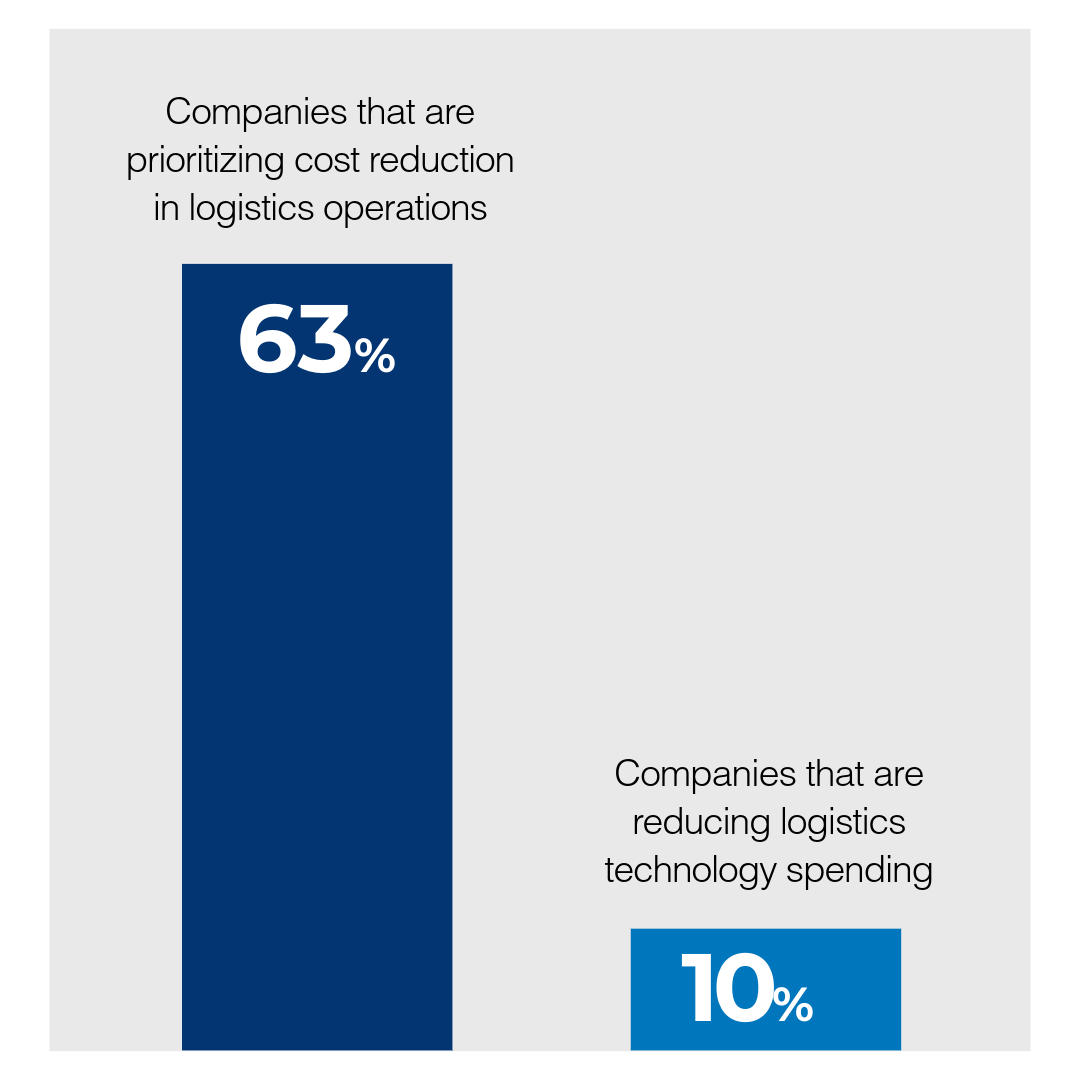
Tech is being buffered from budget cuts because companies are counting on it to solve logistics-related business challenges, including profitability, labor limitations, compliance and performance pressures. This confidence in technology creates opportunities for solution providers that can fit their offerings to customers’ existing environments and specific needs.
Organizations want to modernize, but integration complexity and internal skills gaps are slowing many planned upgrades. Enterprise budgets remain tight, yet service quality can matter as much as price when companies evaluate technology partners.
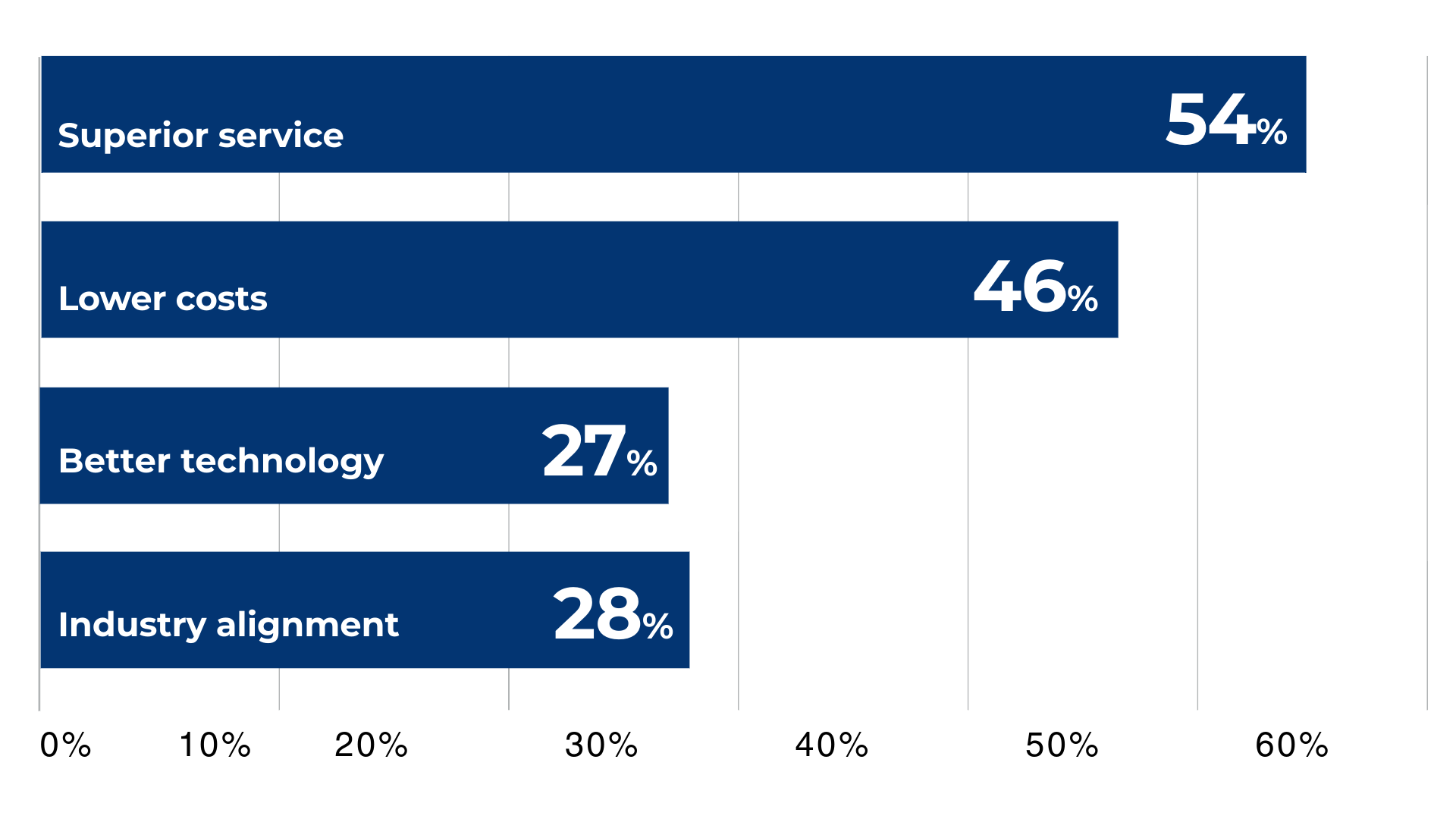
More enterprises would switch providers for better service than for lower costs, even while 63% are prioritizing cost reduction. That suggests businesses see effective technology systems as a tool for improving performance, not simply another expense.
This report highlights business pressures, technology priorities and the qualities enterprises value most in solution providers.

Respondents and results
Survey scope
In March and April 2026, AIM surveyed executives and logistics operations professionals worldwide about business pressures, logistics priorities, technology spending and adoption challenges.
The survey also explored how technology could help their businesses and what qualities they value in solution providers.
This report presents results from 270 end-user enterprises; technology solution provider responses were excluded.
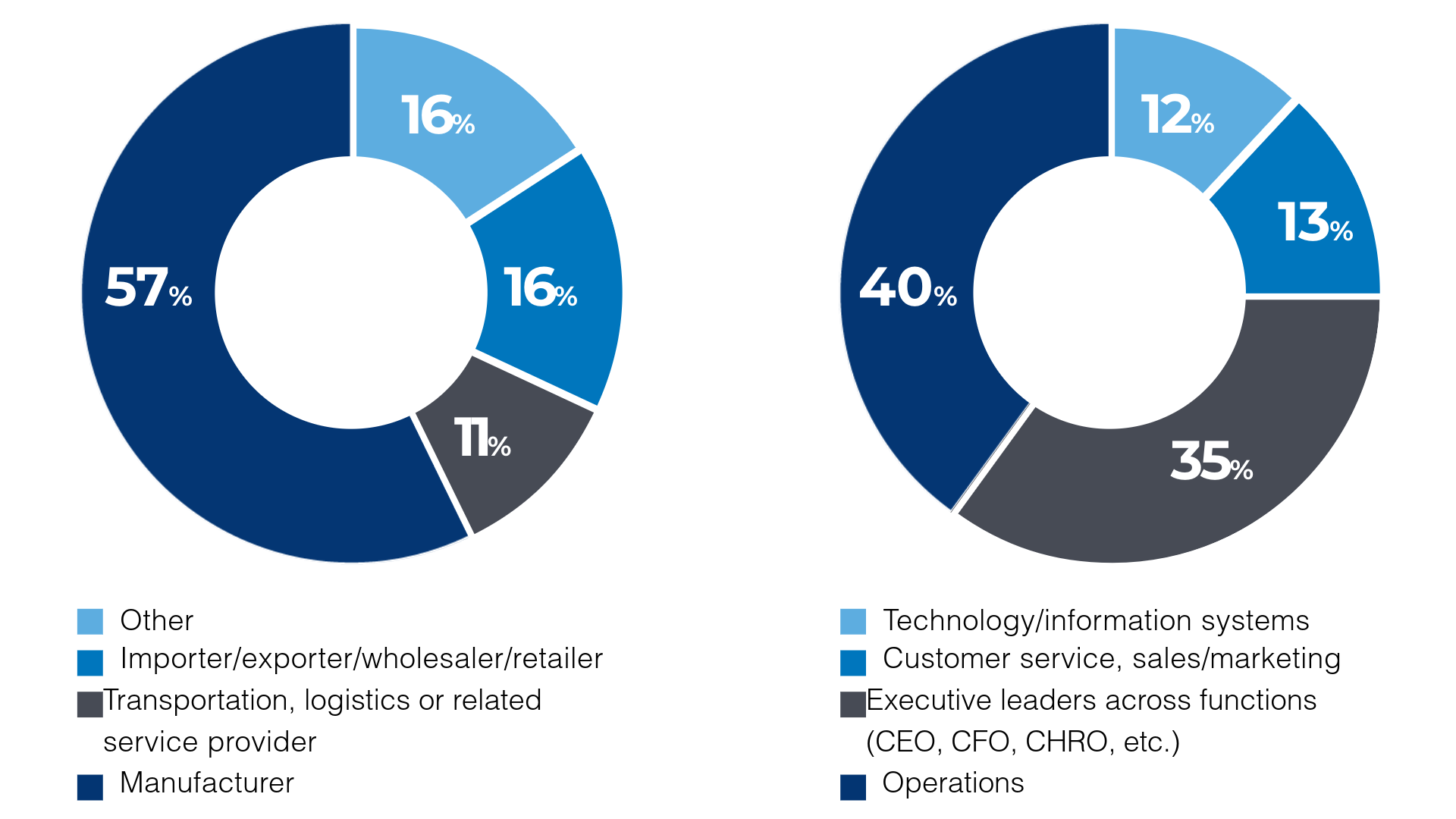
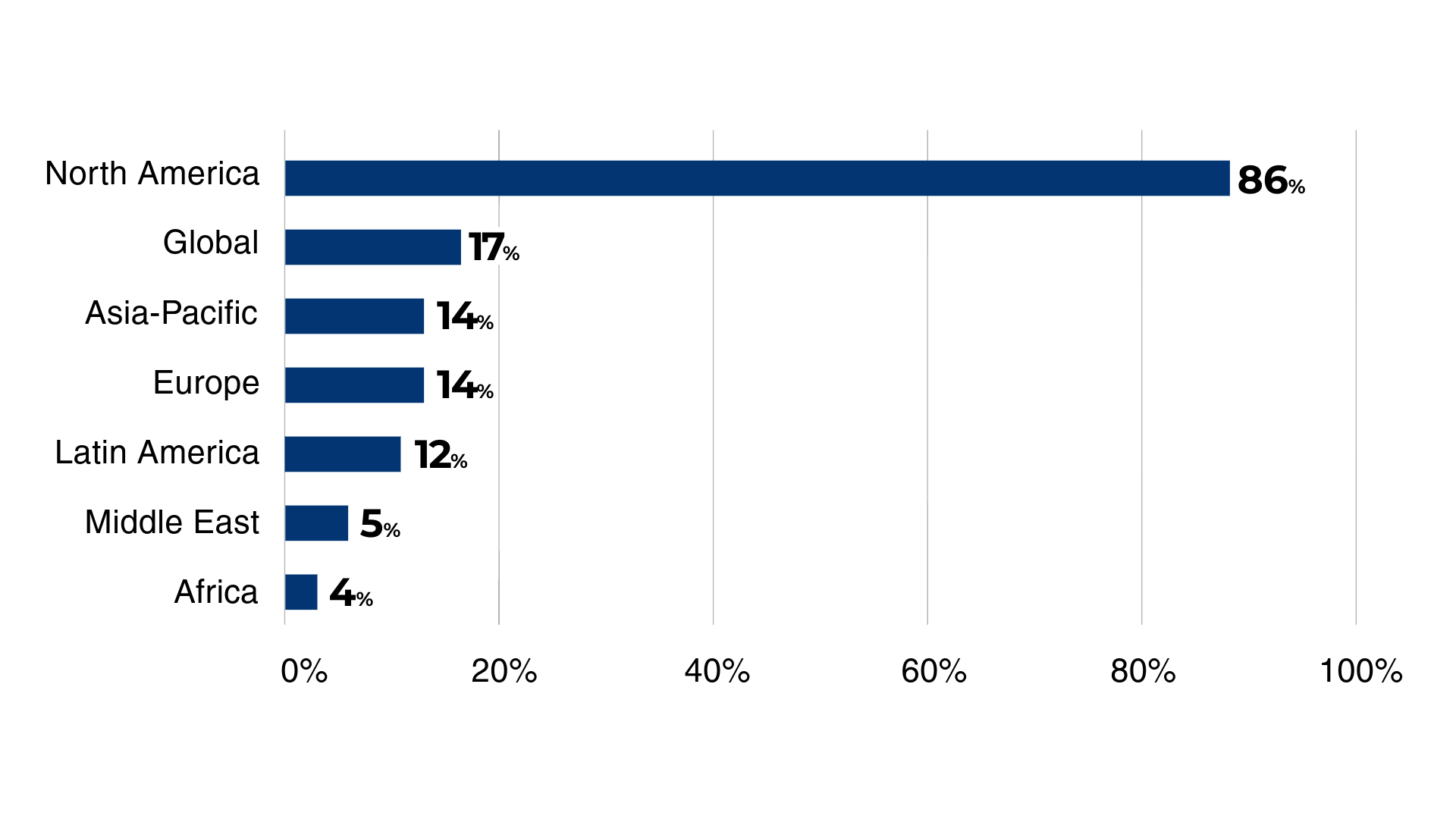
Percentages shown in graphics do not always total 100% because of rounding or because multiple responses were allowed. Rankings are based on the average of all response options for the question; some graphics only show a subset of response options.
Most budgets are flat, but selective investment continues.
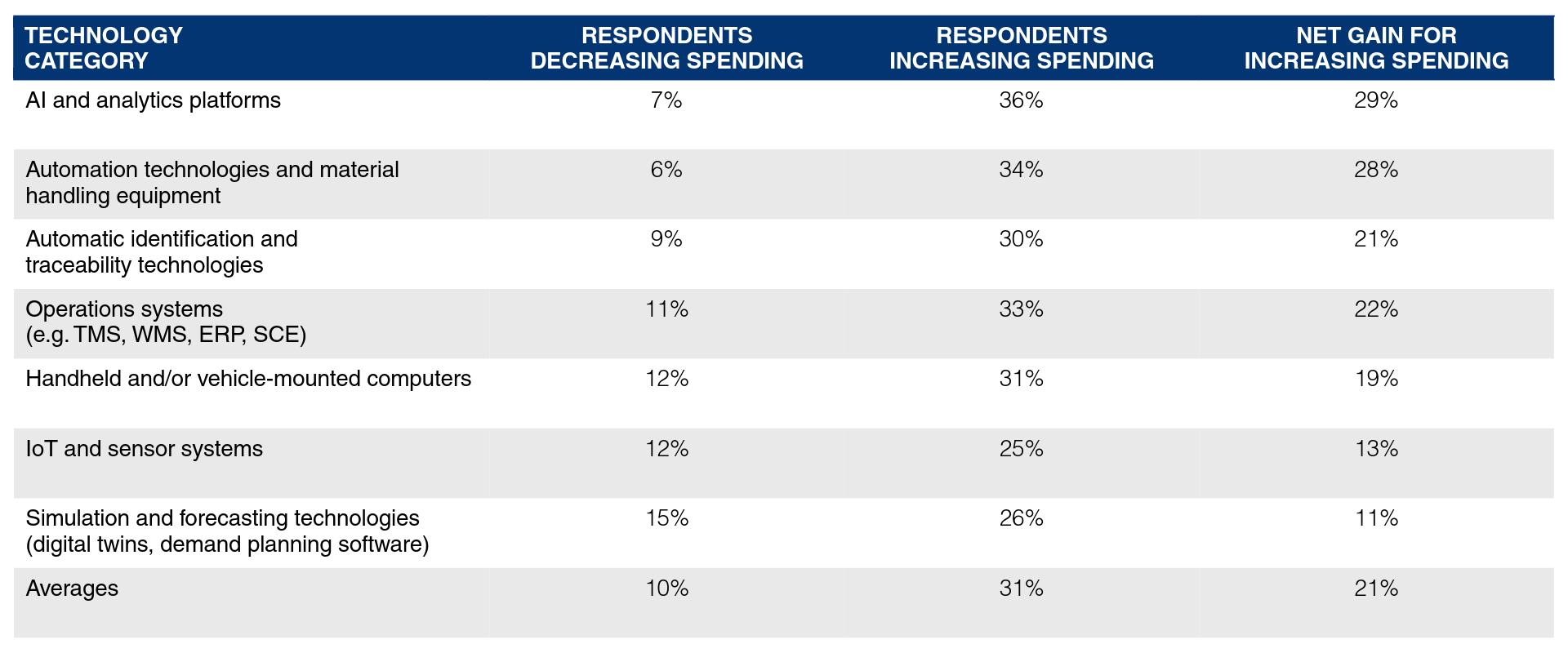
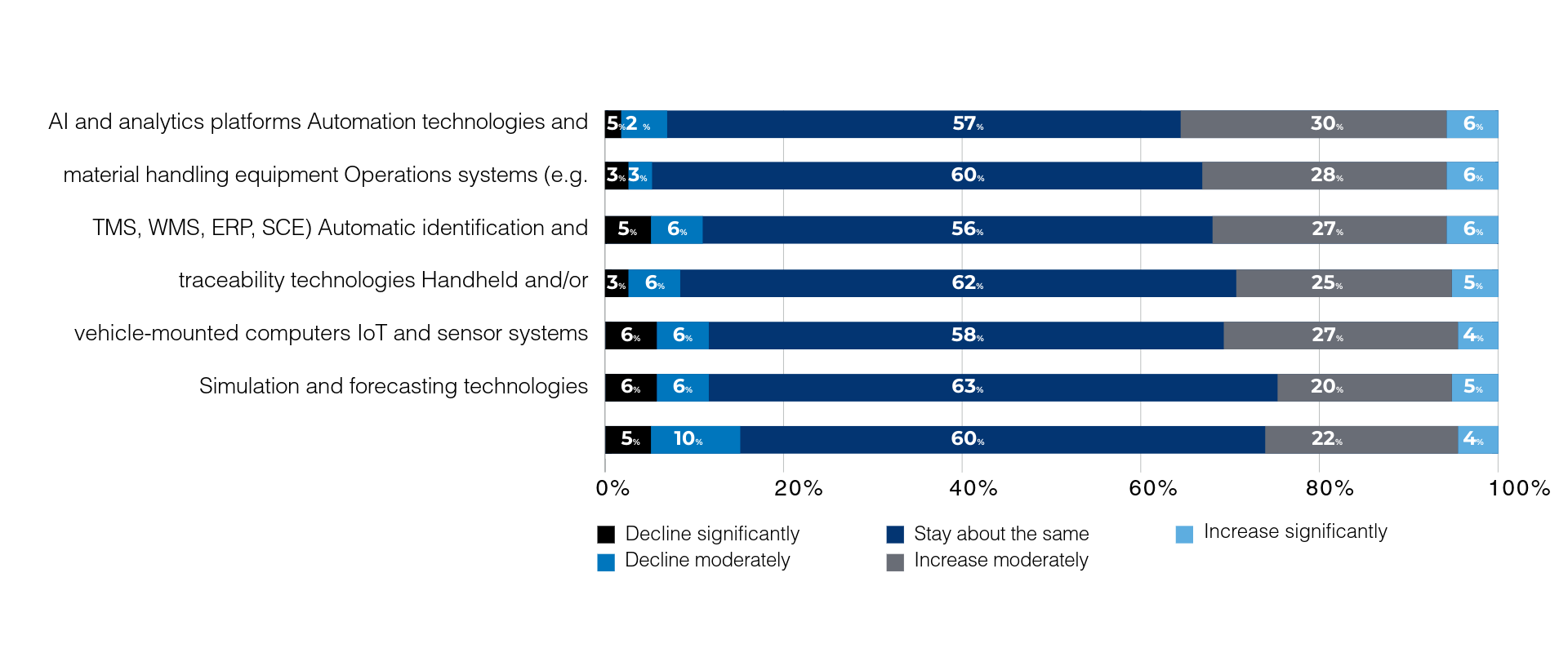
Approximately 60% of enterprises expect their technology spending to remain flat through the end of next year. Among organizations where budgets are changing, 31% plan to increase spending on technology and only 10% plan to decrease it.
What about AI spending?
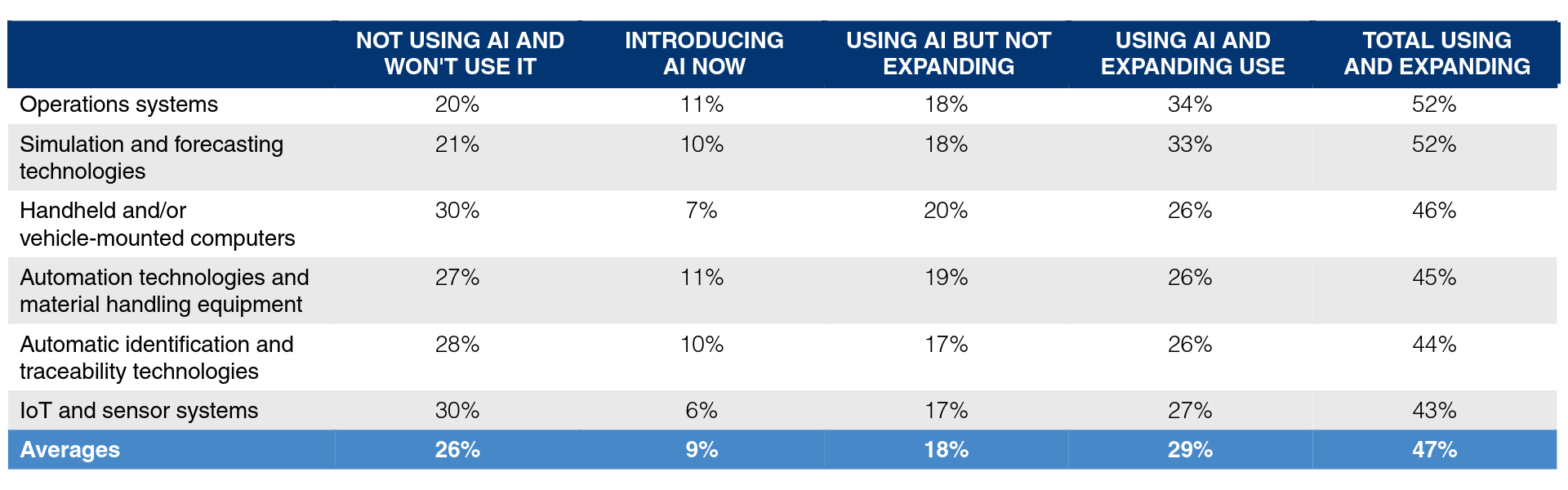
AI and analytics lead planned spending increases, but significant increases remain limited. Current AI use across the other measured technology categories averages 47%, with another 9% planning to introduce AI this year. Eighteen percent are unsure of their organization’s AI status and plans, while 26% say they are not and will not use AI.
Where is the spending?
Automation and material handling rank near the top for planned growth, followed by operations software and AIDC and traceability technologies. Simulation and forecasting show the weakest growth profile, although planned increases still outnumber decreases.
Overall, the results remain consistent with AIM’s 2025 Industry Directions research: most organizations expect steady rather than dramatic spending growth, with selective investment in AI, automation, barcode, sensors and IoT infrastructure.
Budget, skills and integration complexity are slowing modernization.
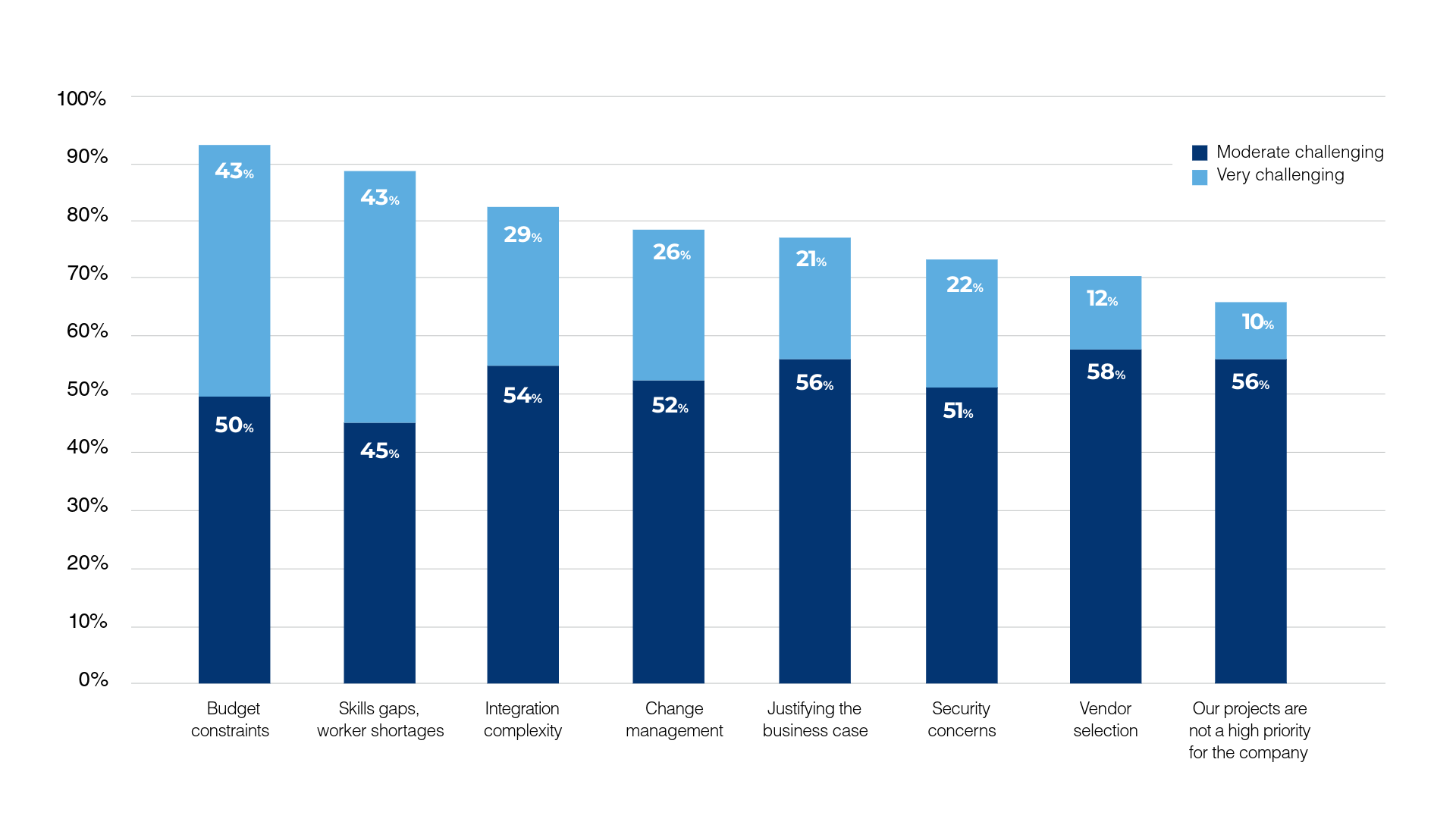
Technology investment is constrained more by execution capacity than by doubts about its value. Budget is the leading barrier, while staffing limitations and integration complexity follow closely.
These barriers point to a role for solution providers that can simplify implementation, reduce internal project workload and support integration and training.
Security, vendor selection and change management also matter, reinforcing the importance of lowering project risk as well as demonstrating business value.
Support matters as much as the technology itself.
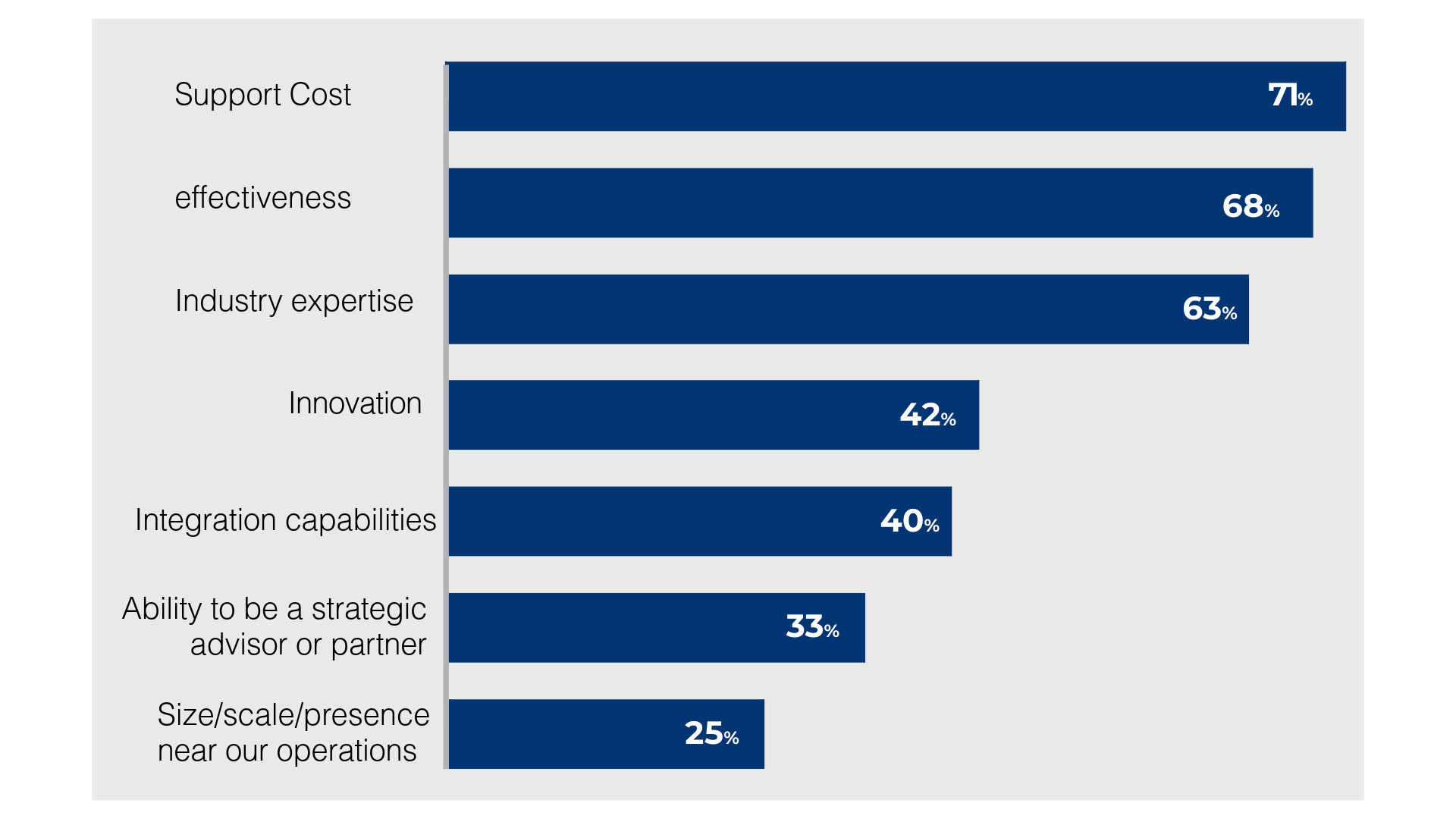
Support edges out cost effectiveness as the quality enterprises value most in solution providers. That fits with the broader survey finding that organizations need help executing modernization with limited internal resources.
Industry expertise, innovation and integration capabilities also matter, giving providers multiple ways to differentiate beyond price.
The strongest partners will understand where customers want to invest, what is preventing progress and how to reduce the burden of implementation.
External pressure and internal execution challenges are colliding.
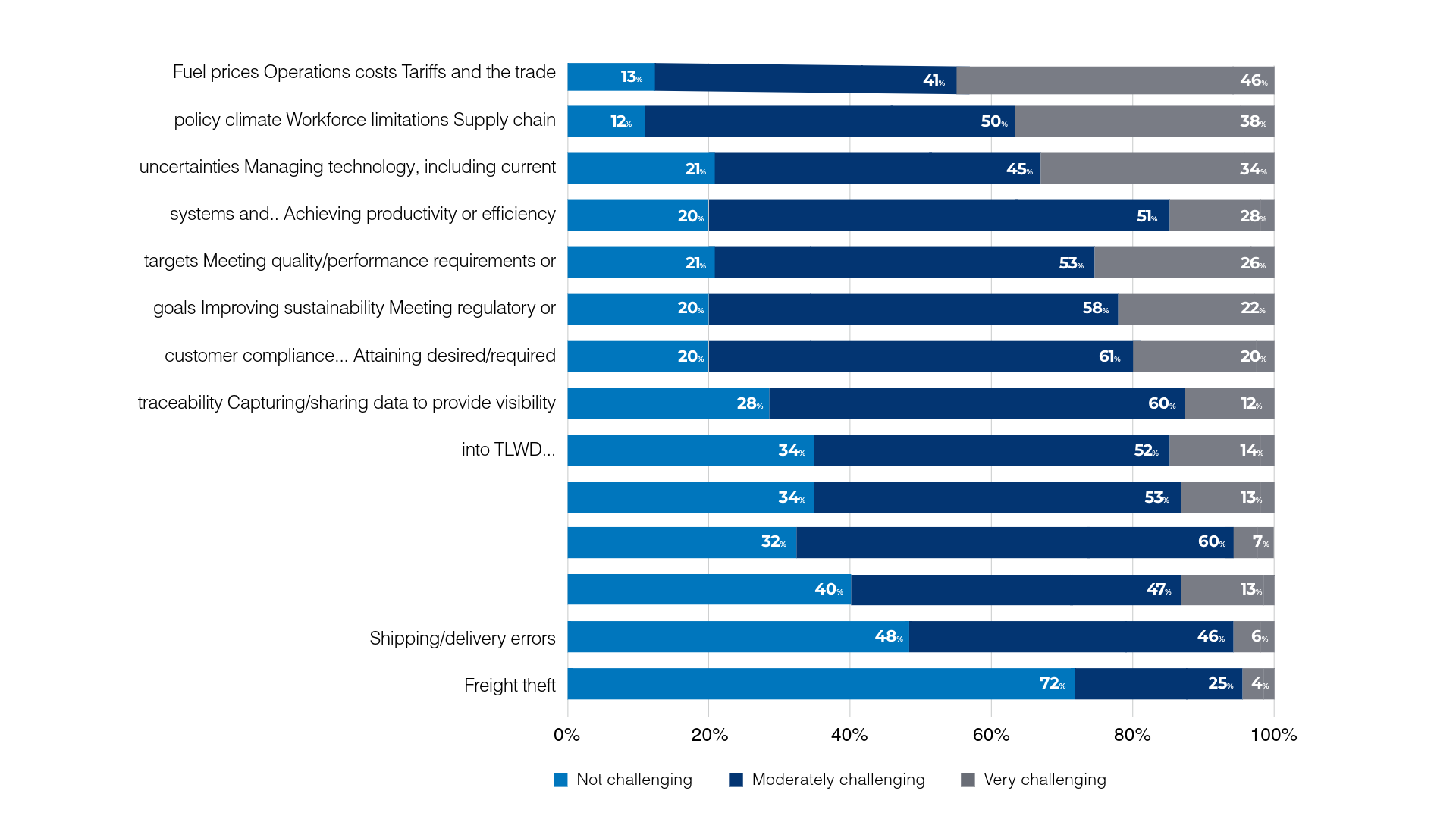
Thirteen of 14 measured conditions are challenging for a majority of respondents. Fuel prices, operations costs, trade policy, workforce limitations and supply chain uncertainty are among the strongest pressures.
Enterprises are prioritizing action on issues they can control.
It can be hard for technology resellers and integration firms to draw a straight line that connects the solutions they sell to geopolitical and macroeconomic challenges that are top of mind with buyers. Modernizing factories and distribution centers does not reopen shipping lanes, reduce crude oil prices or get tariffs overturned. Fortunately, while these issues are among the biggest things enterprise leaders are worrying about, they are prioritizing action on initiatives where they have more control.
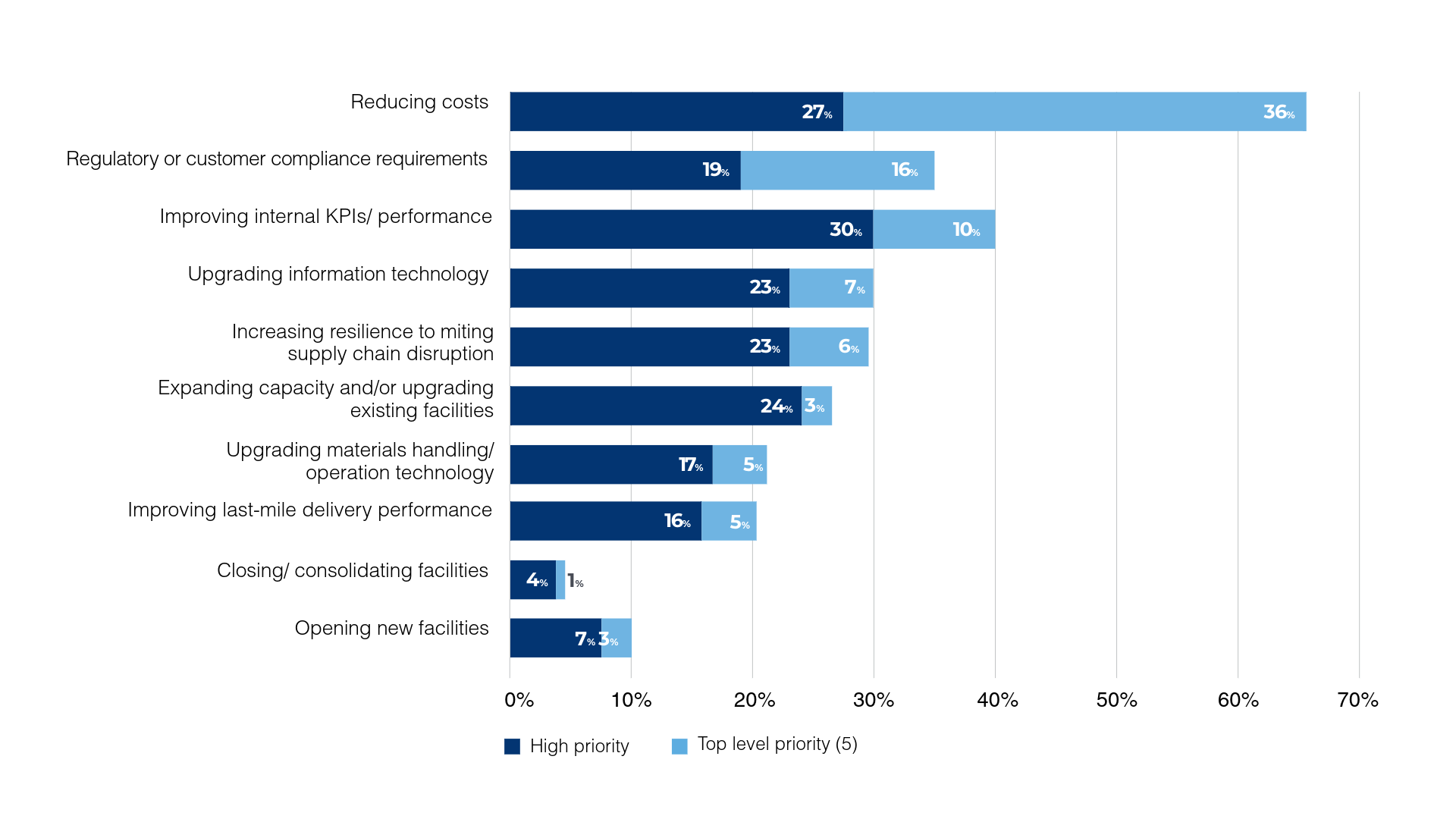
Reducing costs is by far the most common priority within logistics operations, with 63% of businesses ranking it a top or high priority. Complying with customer and regulatory requirements ranked second, followed by improving internal performance and IT upgrades. The desire to cut overall costs helps explain why relatively few organizations are cutting technology spending.
Only 21% of respondents said it was very difficult to justify the business case for proposed technology spending. Budget, lack of knowledgeable workers to execute the project and change management are more likely to inhibit technology. Solution providers can help by showing how their offerings can save money, raise efficiency and help satisfy customer demands or regulatory compliance.
While more organizations ranked cost reduction as their leading priority than anything else, 37% did not rank it as one. Their most important focus areas are upgrading IT infrastructure and expanding or upgrading TWLD facilities.
Where technology can have the most impact
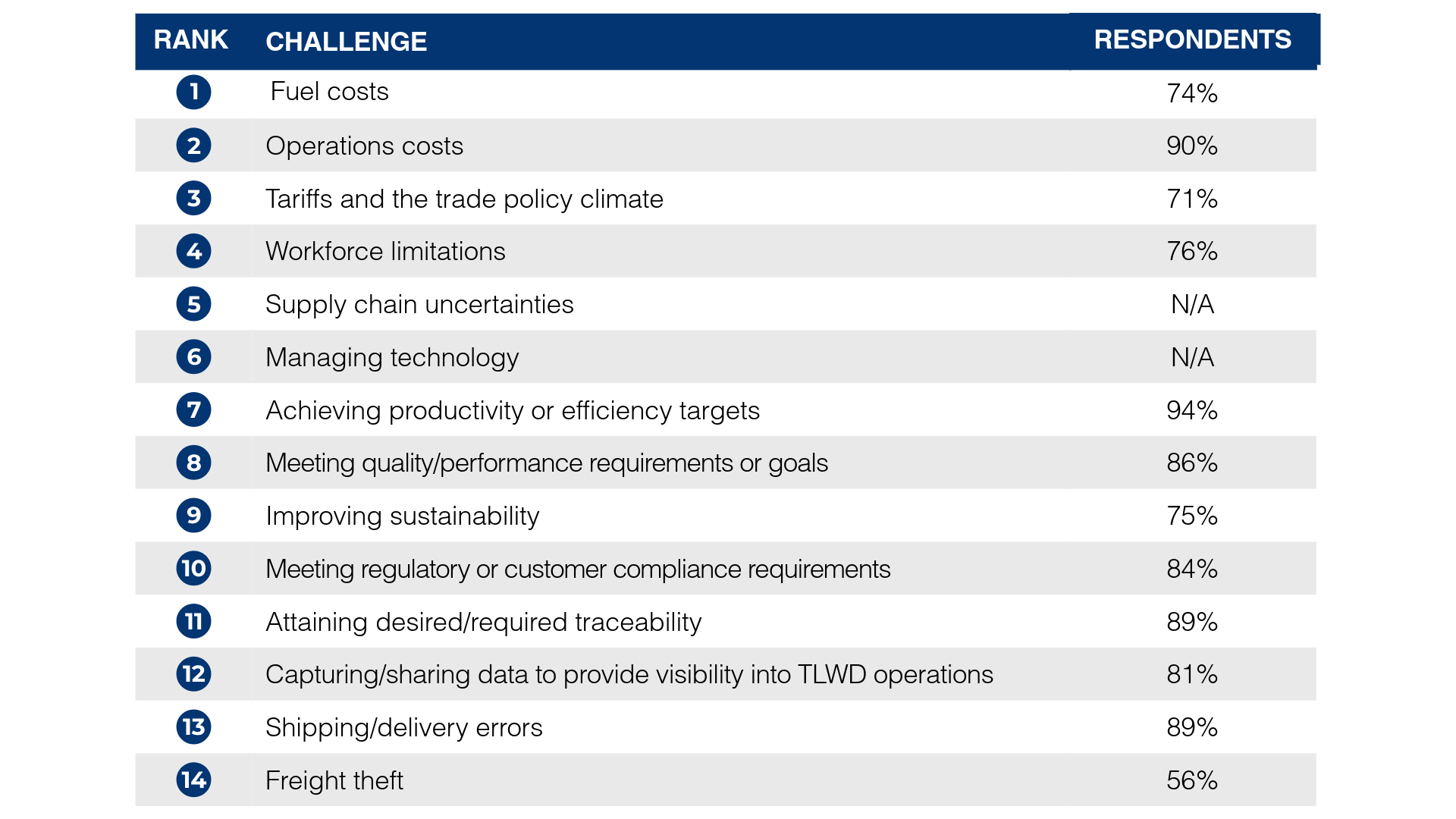
Enterprises believe technology can help address a wide range of logistics challenges, especially operations costs, efficiency, traceability, quality and delivery accuracy.
Respondents also see technology as a way to reduce labor pressure and improve visibility into operations.
Even fuel costs and trade-policy challenges are areas where many respondents believe technology can provide at least some operational benefit.
What about the labor shortage?
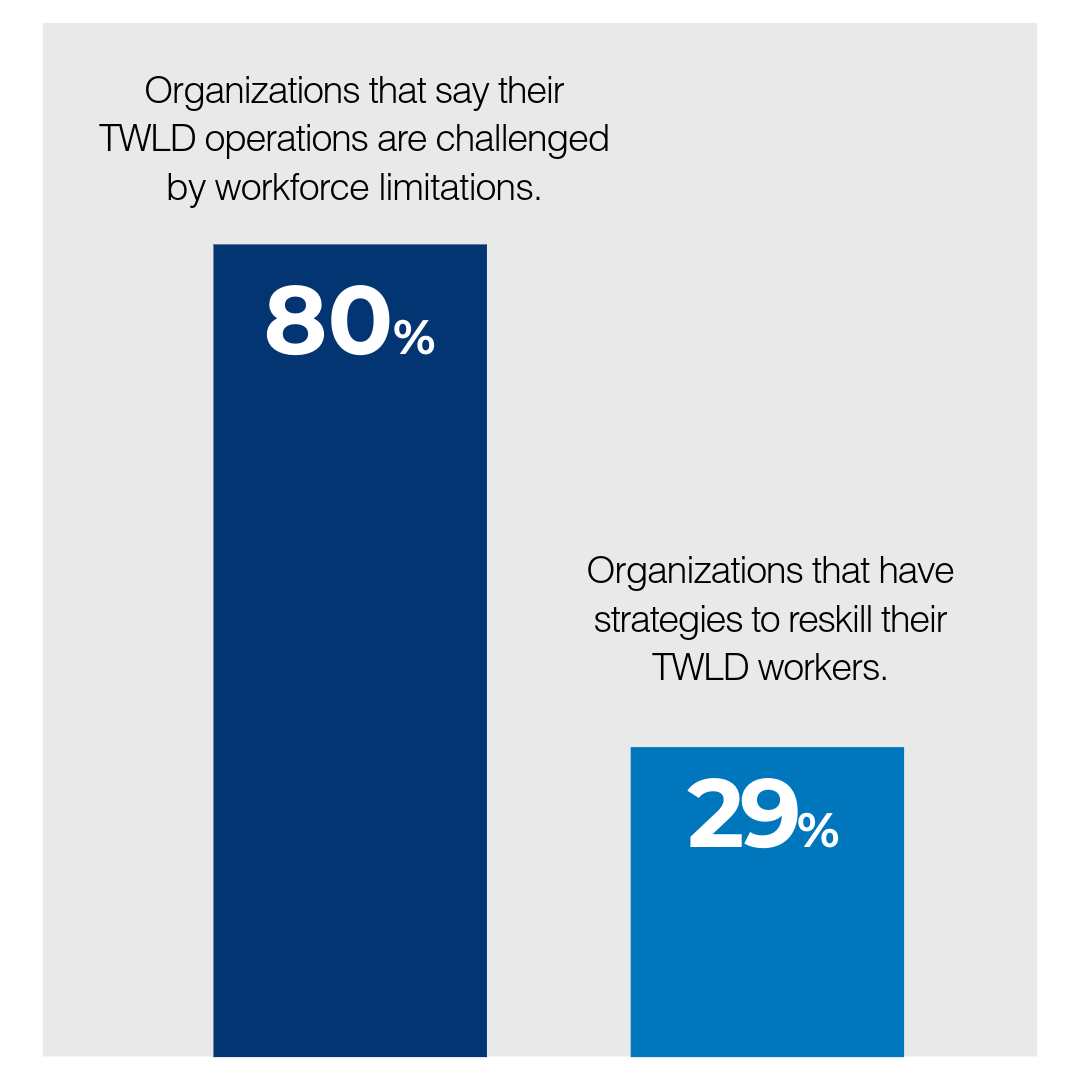
Workforce limitations challenge 80% of organizations, but only 29% report having strategies to reskill their TWLD workers.
Seventy-seven percent believe technology can help mitigate workforce challenges. This gap also creates opportunities for implementation support, integration services, training and after-sale assistance.
Pressure is driving modernization, not stopping it.
High fuel costs, labor pressure and supply chain uncertainty are not stopping logistics modernization. For many organizations, those pressures are helping drive it.
Enterprises are looking to AIDC, mobile computing, software and emerging AI capabilities to lower operating costs and improve performance.
The opportunity for solution providers is to pair technology with strong support, implementation expertise and services that help customers do more with limited budgets and staff.