Be Recognized for Solving Your Customer’s Traceability Challenges; Enter the Case Study Competition

Be Recognized for Solving Your Customer’s Traceability Challenges; Enter the Case Study Competition

Each year, AIM recognizes industry leaders who develop and implement innovative solutions in digital technology. The AIM Case Study Competition highlights groundbreaking applications in AIDC, Blockchain, IoT, and RFID, showcasing how the appropriate solution was selected, the deployment issues they overcame, and the benefits they achieved. Since its inception over a decade ago, the competition recognizes the leaders in digital technology transformation and fosters adoption of these technologies by highlighting the best deployments and product offerings. I always recommend to our members and non-members alike to submit a case study, as the benefits of your innovations is numerous.

Participating in the competition provides a unique opportunity to gain industry recognition, enhance visibility, and showcase real-world applications that drive efficiency and innovation. Winners are honored at major industry events and receive media exposure, helping to elevate their company’s profile and create new business opportunities. The competition serves as a platform for sharing success stories and advancing the adoption of digital technologies worldwide.  The winning submissions are always featured in the resource hub and routinely become some of our most downloaded documents for the year. 

Submissions should clearly outline the business challenge addressed, the technical solution applied, and the measurable benefits achieved. Judges look for compelling case studies with quantifiable results, such as increased accuracy, cost savings, and improved operational efficiency. IoT and Blockchain entries should also highlight deployment maturity and scalability.  Remember to make sure these are all clearly highlighted in the submission and study itself to enhance your opportunity to score well with the judging panel!

The AIM Case Study Competition is open to all, and membership is not required to participate. To enter, review the guidelines, complete the application, and submit your case study by Friday, March 14, 2025. Do not miss this opportunity to gain recognition for your innovative work and contribute to the advancement of automated data capture technologies.

AIM Launches Women of AIDC Industry Group: Empowering Women, Building Community & Leading Change

The world of Automatic Identification and Data Capture (AIDC) technologies is evolving rapidly, and with it, AIM wants to celebrate and move forward with further embracing diversity and inclusion. That is why AIM has taken a significant step forward in doing this by launching the Women of AIDC Industry Group—a dedicated initiative to celebrate, support, and empower women in the AIDC sector.

Why the Women of AIDC Industry Group Matters

For decades, women have been underrepresented in AIDC. However, recent years have seen an encouraging rise in the number of women stepping into influential roles. Recognizing this shift and the need for a supportive network, AIM formed a task force of women leaders within the association to explore ways  to further connect women in the industry. The result of their efforts is the Women of AIDC Industry Group—a collaborative community focused on professional growth, recognition, and mentorship.

This group aims to:

  • Foster a supportive community where women can network, share experiences, and access resources to advance their careers.
  • Highlight and celebrate women’s achievements in AIDC through recognition campaigns.
  • Provide mentorship opportunities for both emerging and established professionals.
  • Offer educational resources such as industry insights, leadership training, and skill-building opportunities.

How to Get Involved

AIM invites the women interested in growing in this space to join this exciting initiative and be part of the movement that champions inclusivity and innovation in AIDC. Here’s some ways you can participate:

  1. Listen to the Women of AIDC Podcast Series – Gain inspiration from the career journeys, challenges, and insights of dynamic women across the industry.
  2. Visit the Women of AIDC Webpage – Stay updated on upcoming events, access educational materials, and find mentorship opportunities.
  3. Join the Conversation – Engage with AIM’s community through networking events, webinars, and industry discussions.

A Step Toward a More Inclusive Future

The Women of AIDC Industry Group aligns with AIM’s broader mission of fostering collaboration, education, and advocacy within the industry. By highlighting the contributions of women and providing them with the tools and connections they need to succeed, AIM is paving the way for a more diverse, innovative, and inclusive future.

AIM Chapter Meeting Recap: A Collaborative Future for 2025

Last month, AIM chapters from around the world gathered virtually for a dynamic and insightful meeting. This event was a testament to AIM’s unwavering commitment to advancing the automatic identification and data capture (AIDC) industry through collaboration, innovation, and strategic planning.


The meeting kicked off with updates from various AIM chapters, each bringing a unique perspective on their regional challenges and successes. Here’s a glimpse into the key highlights:


Peter Altes, Managing Director for AIM – D e.V., provided a candid overview of the current market in Europe. Peter shared optimism of further growth as he discussed upcoming events like the their Track and Trace Theatre at LogiMat and the Transport Logistics 2025 event, which will invigorate industry collaboration.


Jeanne Duckett from AIM North America shared several exciting developments, including board activities and pivotal food safety initiatives. Notably, AIM North America has been actively engaging with the US House Committee on Energy & Commerce and the FDA to enhance food traceability, demonstrating AIM’s influence on critical industry regulations.  You can read those comments here.


Sanjive Mehta of AIM India highlighted the chapter’s successful webinars that have attracted significant attention, along with the addition of Zebra Technologies as a new member. This growth is a testament to AIM India’s expanding community.


Grigory Slusarenko from AIM Russia spoke about their integral role in the national traceability system. Collaborating closely with GS1 Russia, AIM Russia is providing expert support on implementing AIDC technologies such as UHF RFID and DataMatrix for a wide range of products, further cementing their leadership in the field.


Masaki Ehara from AIM Japan delivered exciting news about strategic partnerships and the successful ‘AIDC Connect Asia’ event orchestrated by Anna Lau of AIM Asia .


Anna Lau from AIM Asia sent notes about the successful ‘AIDC Connect Asia’ event.  With over 120 attendees, this event showcased AIM Asia’s strategic alliances with organizations like LogiMat, the Thai International AIOT Association, and IEEE Macau Chapter. The event featured industry forums that focused on retail, logistics, and supply chain, fostering meaningful dialogue and collaboration.


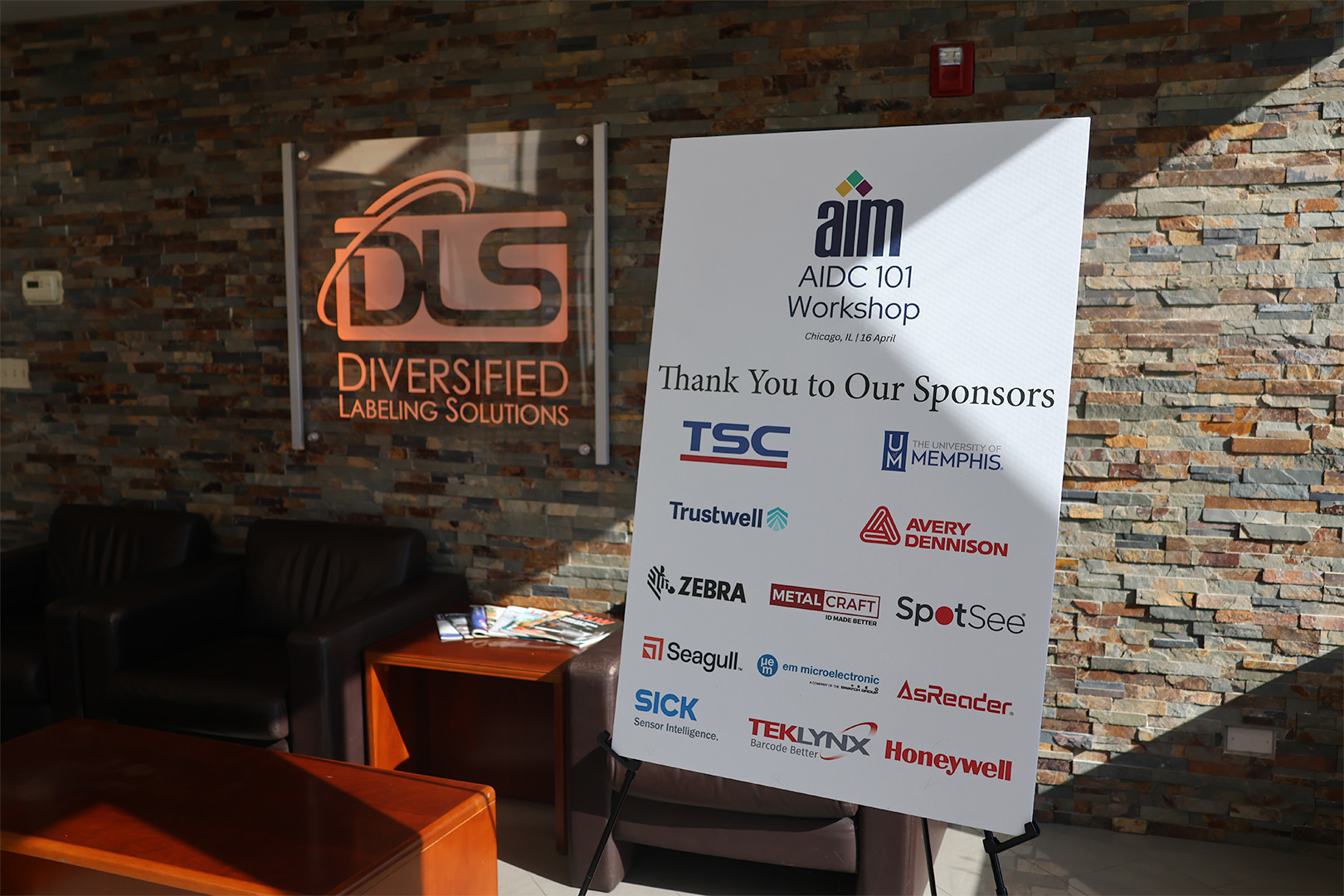
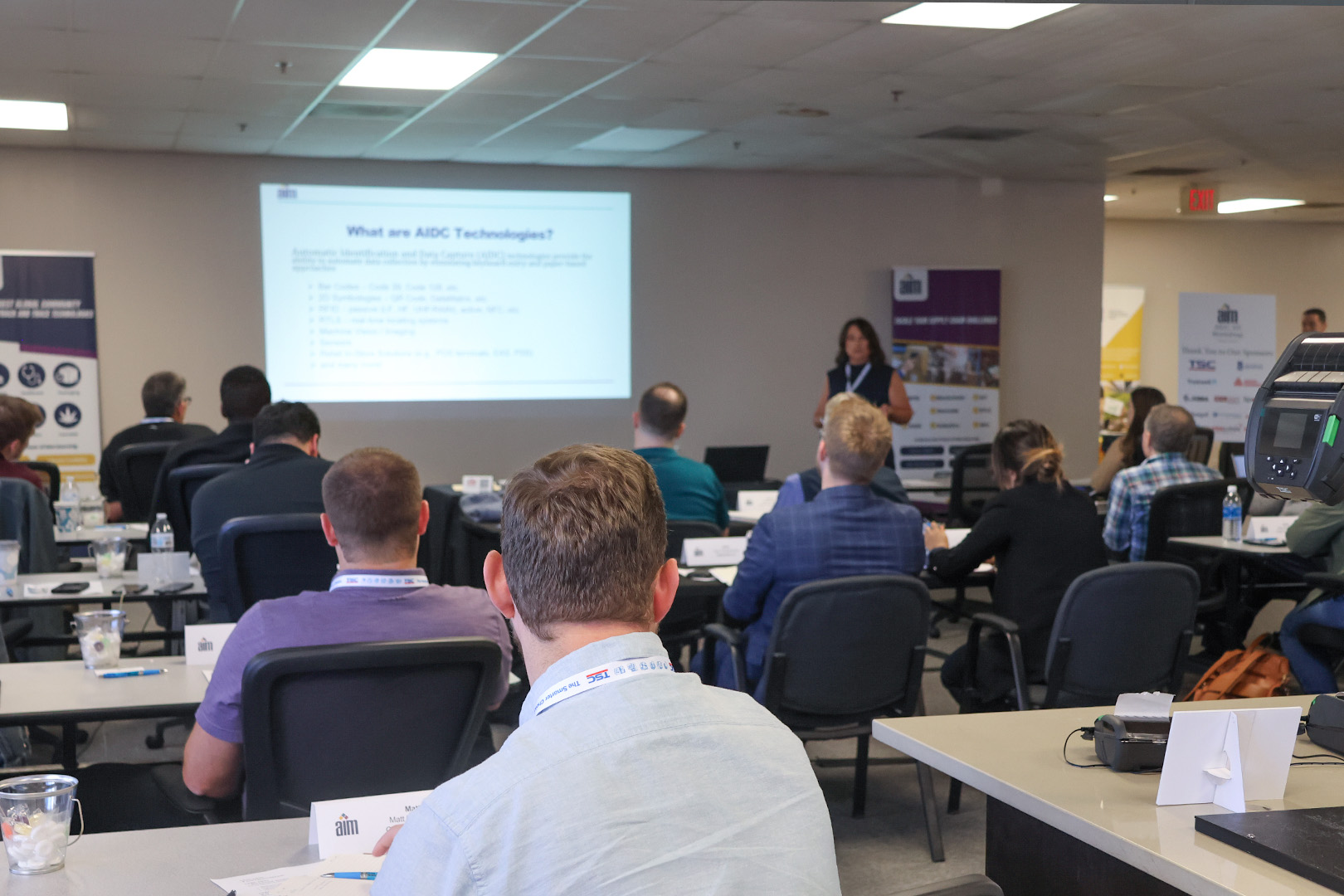
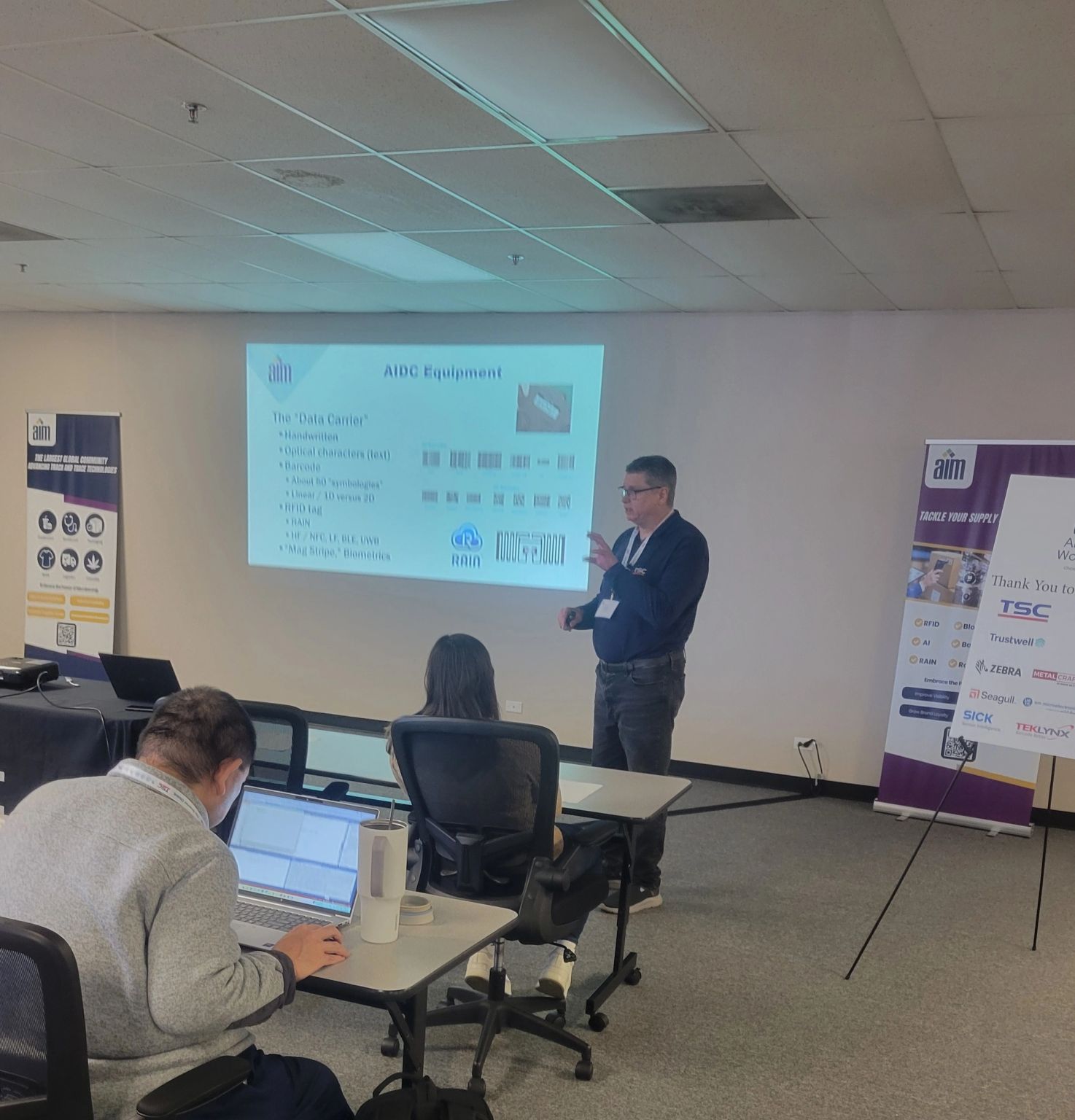
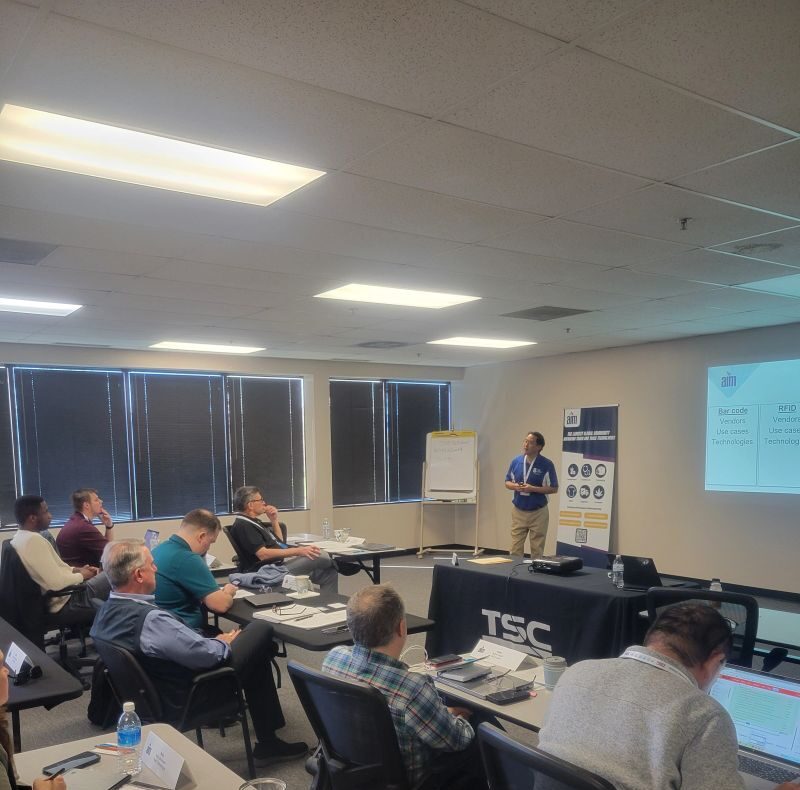
Looking ahead, AIM and its global chapters outlined a robust strategic plan for 2025, underscoring their commitment to growth and innovation. Key initiatives include the formation of ad hoc teams to address specific challenges and the launch of new programs like the AIDC 101 Workshop.


Inclusivity and professional growth are also at the forefront of AIM’s agenda, with the introduction of the Young Professionals of AIDC and Women of AIDC initiatives. These programs aim to foster a more inclusive industry, providing opportunities for growth and networking across all AIM chapters.


Membership development remains a top priority, with plans to enhance AIM’s membership package to attract new members and retain existing ones. By adding new benefits and focusing on member engagement, AIM aims to solidify its community and drive further growth.


This meeting underscored AIM’s dedication to fostering collaboration and innovation across its global chapters. With a clear strategic vision and numerous initiatives planned, AIM is well-positioned to lead the AIDC industry into 2025. The future looks bright as AIM continues to drive growth, embrace innovation, and ensure continued success for its members worldwide.


If you would like to get more insight into the work of AIM and our worldwide chapters, contact chapter liaison Michael Allen.


Celebrating AIM Industry Groups’ Achievements in 2024

AIM’s industry groups have always been at the forefront of creating, learning, and sharing knowledge to advance automatic identification and data capture (AIDC) technologies. These collaborative efforts result in standards development, technical reports, educational materials, advocacy, and insights into the latest industry trends. Many AIM-published symbologies and standards have been adopted internationally through the ISO standardization process. In 2024, AIM’s industry groups reached several significant milestones that underscore their commitment to innovation and excellence.

Technical Symbology Committee (TSC)

Led by Steve Keddie of GS1 Global, the TSC continues to help get symbologies to market worldwide. This year, the group prepared the Ultracode International Symbology Standard for submission to ISO. This innovative symbology, which features a color multi-row, variable-size 2D matrix design, ensures compatibility with standard sRGB-compliant scanners and devices. Additionally, the committee published an awareness piece on QR Code phishing risks, providing actionable safety practices to prevent users from falling victim to malicious schemes that compromise sensitive information.

RFID Experts Group (REG)

Under the guidance of Jerry Peyton of VISTA IT Systems, the REG made significant strides in advancing RFID technology. The group released the “Understanding Sensors for the Supply Chain” whitepaper, which highlights the pivotal role environmental sensors play in ensuring efficiency, compliance, and traceability across diverse industries. They also submitted comments to the FCC on the potential relocation of the Lower 900 MHz Band, addressing the critical implications of proposed frequency band changes and emphasizing the value of current use cases. Another landmark achievement was the launch of RFID.org, a comprehensive online resource designed to educate and support RFID implementers, users, and stakeholders.

Visibility Technologies Industry Group (VTIG)

Led by Kim MacDonald of REATH, the VTIG focused on enhancing product lifecycle visibility and interoperability. In 2024, the group published the whitepaper “How AI, IoT, Robotics, and AIDC Technologies Are Coming Together in Industrial Environments,” showcasing how AIDC’s foundational role in data capture is now augmented by IoT, AI, and robotics to enable advanced decision-making and traceability. They also addressed environmental sustainability challenges by releasing guidance on RFID tag recycling and disposal. Furthermore, the VTIG submitted comments to the FCC on IoT cybersecurity labeling, advocating for the use of established standards and QR Codes to deliver user-friendly, accessible information.

Join Us in Shaping the Future

These accomplishments exemplify the transformative power of collaboration within AIM’s industry groups.  While these are the items finished in 2024, there are several that will be completed in the first quarter of 2025 that members can take a part in helping finish.  On top of that, many new projects will begin, so if you want to be part of this dynamic community and help shape the future of AIDC technologies, contact Michael Allen, AIM’s Business Development Director, to learn how you can get involved.


How AI, IoT, Robotics, and AIDC Technologies Are Transforming Industrial Environments

Industrial environments are experiencing a technological renaissance, driven by the convergence of Artificial Intelligence (AI), the Internet of Things (IoT), robotics, and Automatic Identification and Data Capture (AIDC) technologies. As organizations strive for greater efficiency, cost-effectiveness, and compliance, these interconnected innovations offer unprecedented opportunities for transformation. AIM’s Visibility Technologies Industry Group recently published a whitepaper titled How AI, IoT, Robotics, and AIDC Technologies Are Coming Together in Industrial Environments. This insightful resource highlights the convergence of these advanced technologies and their transformative impact on modern industrial settings.

In this paper we discuss how Barcodes, RFID, and other AIDC tools have long been staples of manufacturing, distribution, and logistics, enabling rapid, accurate data collection. Now, IoT systems are amplifying this foundation by integrating sensor-driven data with AI’s decision-making capabilities and robotics’ physical precision. For example, autonomous mobile robots (AMRs) equipped with AIDC sensors can navigate warehouse environments to optimize picking, while AI processes real-time data to fine-tune operations. Gartner’s prediction that smart robots will outnumber frontline manufacturing workers by 2028 underscores the urgency for industries to embrace this transformation.

One standout case study highlighted in the whitepaper is the Haldia Dock Complex in India, where an IoT-enabled system leveraging RFID, intelligent cameras, and AI reduced cargo clearance time from 12 hours to just three. Predictive maintenance and optimized resource allocation improved profitability and customer satisfaction, illustrating the potential of these technologies to revolutionize operations. Such examples reveal how interconnected systems offer both immediate efficiency gains and long-term competitive advantages.

The potential applications are vast. From predictive maintenance enabled by IoT-connected equipment to AI-driven quality control systems and fully integrated smart warehouses, these technologies are reshaping the industrial landscape. However, the success of these systems depends on AIDC technologies as a foundation for accurate identification and traceability. Whether managing item-level inventory or orchestrating AI-guided robotics, AIDC ensures the integrity and precision of these advanced systems.

The AIM Visibility Technologies Industry Group is at the forefront of exploring these intersections and shaping best practices. If you are interested in the future of industrial technology, we invite you to join this collaborative effort. Contact Michael Allen to learn how you can contribute to and benefit from this groundbreaking work. Together, we can drive innovation and chart the course for tomorrow’s industrial solutions.


Understanding Sensors for the Supply Chain: How to Choose and Use Environmental Sensors

Today, environmental sensors are pivotal in enhancing supply chain operations by enabling organizations to monitor actual conditions in real-time, transforming static plans into dynamic, proactive processes. AIM’s RFID Experts Group has released a comprehensive whitepaper, Understanding Sensors for the Supply Chain: A Guide to Choosing and Using Environmental Sensors, to serve as a crucial resource for professionals in logistics, quality control, and materials management. This guide is available to download now, providing in-depth insights on how to integrate environmental sensors into supply chain operations effectively.

For AIM members interested in discussing RFID enabled sensors, the RFID Experts Group’s next meeting will be held on Thursday, November 21, at 2 PM ET.  Contact Michael Allen for more information.

Why Sensors Are a Game-Changer in Supply Chain Management

Environmental sensors provide real-time, granular data on product conditions throughout the supply chain, from production to final delivery. These sensors help mitigate risks by monitoring factors like temperature, moisture, light exposure, vibration, and more—conditions that, if left unchecked, can impact product quality, safety, and compliance. As the whitepaper notes, sensor-driven insights empower organizations to adopt flexible strategies based on real-time data, supporting compliance with regulations like the U.S. Food Safety Modernization Act (FSMA), U.S. Drug Supply Chain Security Act (DSCSA), and the EU Digital Product Passport (DPP).

Key Questions the Whitepaper Addresses

The whitepaper covers fundamental questions for anyone considering sensor adoption:

  1. Who can benefit from environmental sensors?
  2. What types of environmental sensors are available?
  3. Where are environmental sensors used within the supply chain, and what are the use cases?
  4. How can we select the right sensors for specific needs?
  5. How do sensors support compliance with regulatory standards?
  6. What future trends are expected for sensor use in supply chains?

These questions help organizations define their sensor strategy, whether they are managing pharmaceuticals, food products, or other perishable and high-value goods.

Practical Applications Across Industries

The whitepaper provides a guide to choosing sensors based on operational needs and discusses various applications across industries:

  • Pharmaceuticals and Healthcare: Sensors ensure sensitive products are stored and transported under optimal conditions, maintaining efficacy and compliance.
  • Food Supply Chains: Sensors reduce waste and spoilage by monitoring temperature and freshness, helping businesses meet safety and quality requirements.
  • Industrial Manufacturing: Sensors contribute to predictive maintenance and process optimization by providing real-time data on equipment and product conditions.

Looking Ahead: The Future of Sensors in Supply Chain Operations

The whitepaper explores trends like digital transformation and the Internet of Things (IoT), which are driving widespread sensor adoption. With increasing regulatory and consumer demands for transparency and traceability, sensors are positioned to play a central role in the digital supply chain landscape. The integration of sensors with AI and ERP systems, such as SAP and Oracle, enables real-time analysis and decision-making, adding value through increased visibility and automation.

Get Involved with AIM’s RFID Experts Group

This whitepaper is a testament to AIM’s ongoing commitment to supporting innovation and best practices within the AIDC industry. If you are an AIM member, join the RFID Experts Group meeting on November 21 at 1 PM ET to gain further insights and discuss real-world applications with industry peers.  Again, reach out to Michael Allen for more information on this call or other work group meetings.

To learn more about AIM and its work in advancing the use of sensors and RFID in supply chain operations, visit our website and explore membership benefits and resources that can help elevate your business in the digital age.