
AsReader Announces Expansion of RFID Basket-Reading Solutions into North America with New Broadscope Patent

AsReader Announces Expansion of RFID Basket-Reading Solutions into North America with New Broadscope Patent

Newly-approved U.S. patent strengthens technology platform for retail apparel, grocery, and automation applications while enhancing consumers’ buying experience

Portland, OR – July 6, 2026…  AsReader, Inc., a provider of RFID and retail automation technologies, today announced the expansion of its RFID basket-reading solutions to now include the entire North American market. This will speed consumers through self-checkout lanes as they won’t need to scan every item, and it will help retailers with more accurate checkouts, thereby reducing loss of missed items in carts. While Asterisk has previously obtained multiple U.S. patents related to RFID technologies, this latest broadscope patent is particularly significant because it provides broad patent protection for RFID basket-reading technology in retail operations in environments such as apparel stores, supermarkets, and other retail applications.


Called the AsReader RFID Reading TUB, the Point-of Sale device has been developed, tested and implemented in Japan by parent company Asterisk, Inc. (Asterisk (TSE:6522) AsReader’s RFID technology enables retailers to instantly identify multiple tagged items placed together inside a shopping basket, tote, container, or checkout area. The technology has been deployed in apparel and specialty retail environments where RFID-based inventory management and checkout systems have become widely adopted, but not approved for us in North America until now.
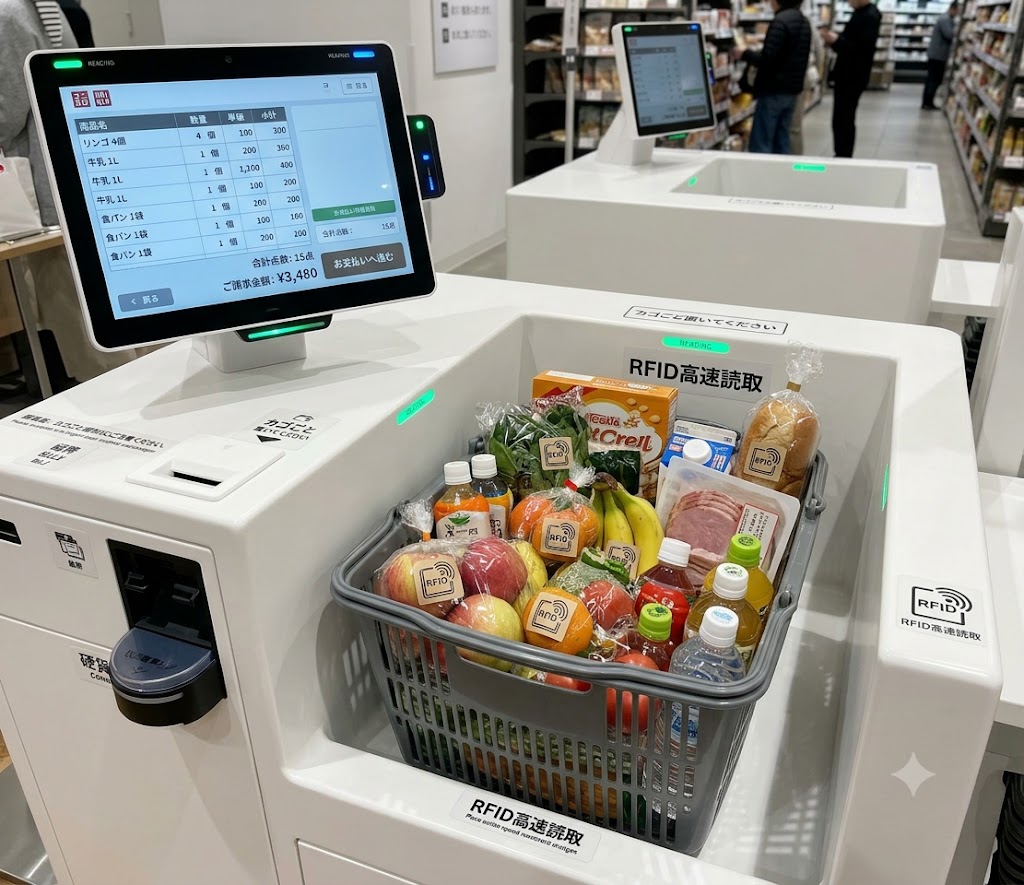
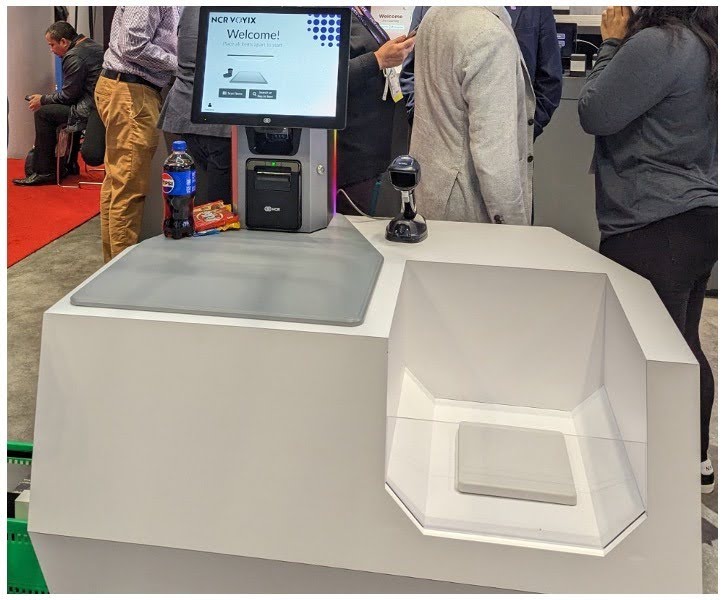
 

A key advantage to consumers and retailers of the AsReader platform is its proprietary RFID reading architecture, which creates a controlled reading zone capable of accurately identifying tagged items placed inside the basket while minimizing unintended reads from surrounding products. This enables both high read accuracy and operational reliability in busy retail environments.

By combining innovative products with a robust broadscope patent portfolio, AsReader is committed to providing retailers with confidence in adopting next-generation RFID solutions while continuing to expand its presence throughout the United States.


In June, 2026, AsReader received a Notice of Allowance and Issuance (NOA) from the United States Patent and Trademark Office (USPTO) covering important aspects of this RFID reading technology. The newly approved broadscope patent further strengthens AsReader’s intellectual property portfolio and complements existing patent protection developed in Japan and other international markets, while making retail operations easier for both consumers and retailers alike.

“Our goal is to bring proven RFID technologies from Japan to retailers throughout North America,” said Paul Whitney, Vice President and COO of AsReader, Inc. “Retailers are increasingly looking for ways to improve customer experience, reduce labor requirements, and gain real-time inventory visibility. RFID enables all three.”

 AsReader will work directly with retailers while also expanding partnerships with POS system providers, RFID tag manufacturers, system integrators, and technology partners throughout the United States, Canada, and Mexico. “The broadscope patent strengthens the intellectual property framework supporting RFID Reading TUB deployments and reinforces AsReader’s long-term competitive position in one of the world’s largest RFID markets,” said Whitney.

 

While retail apparel remains one of the fastest-growing RFID sectors due to its already established RFID infrastructure, AsReader also sees significant opportunities in grocery, supermarket, healthcare, logistics, warehouse, and supply-chain applications.

AsReader management believes that advances in RFID technology will carve a new path for a new generation of checkout and inventory management systems, helping retailers improve efficiency while delivering a more seamless customer experience.

The broadscope patent is owned by Asterisk, Inc. (Japan). AsReader, Inc. serves as the U.S. sales and marketing subsidiary responsible for commercializing RFID solutions in the North American market.


Barcode Test LLC Launches Redesigned Website Highlighting Full Suite of Barcode Quality Services

Barcode Test LLC Launches Redesigned Website Highlighting Full Suite of Barcode Quality Services

New site at barcode-test.com showcases same-day testing, recalibration, professional training, and compliance consulting alongside verifier sales

RUCKERSVILLE, VA — June 27, 2026 — Barcode Test LLC, a specialist in barcode quality assurance and compliance, today announced the launch of its newly redesigned website at barcode-test.com. The updated site offers a comprehensive look at the company’s full range of services — barcode testing, verifier recalibration and repair, professional training programs, and compliance consulting — in addition to its well-established barcode verifier sales and distribution.

“We wanted the new site to reflect everything we actually do for our clients, not just the equipment we sell,” said John Nachtrieb, founder of Barcode Test LLC. “Most of our value comes from solving problems — helping companies understand why their barcodes are failing, training their QA teams, getting their verifiers back into calibration, and guiding them through complex compliance requirements. The new site makes all of that much clearer.”

Services featured on the new website include:

  • Same-Day Barcode Testing — ISO/IEC quality and compliance testing for 1D and 2D barcodes on virtually any surface, with no appointment required. Ideal for urgent press holds, shipment disputes, and compliance audits.
  • Verifier Recalibration & Repair — Scheduled and rush recalibration services to keep verifiers operating to ISO standards, extending instrument life and ensuring measurement accuracy.
  • Professional Training Programs — Four levels of instructor-led training (Basic, Basic Plus, Advanced, and Advanced Plus) tailored to company-specific needs, covering barcode symbologies, ISO print quality parameters, and industry application standards including GS1 Healthcare, AIAG, HIBCC, and MIL-STD-130 and more.
  • Compliance Consulting — Expert guidance for brand owners, packaging printers, medical device manufacturers, pharmaceutical companies, and defense contractors navigating barcode quality policy, GS1 compliance, and supply chain readiness.
  • Barcode Verifier Sales — ISO-compliant 1D and 1D/2D verifiers with free user training, online demos, and a try-and-buy program.

The site also features an expanded library of real-world case histories drawn from the company’s decades of experience, covering industries from corrugated packaging and healthcare to automotive manufacturing and pharmaceutical labeling.

Visitors can book a free 15-minute consultation directly from the website or submit barcode samples for same-day testing via the contact form at barcode-test.com.

Barcode Test LLC provides barcode quality and compliance services to manufacturers, printers, brand owners, and supply chain participants across North America, healthcare, defense, automotive, pharmaceutical, and consumer goods industries. The company is recognized for its technical depth, responsiveness, and commitment to finding the right solution for every client — even when that means recommending options it doesn’t sell.

Barcode Test LLC is a verified federal contractor (USFCR). The LLC is an authorized reseller of Axicon barcode verifiers. It is the only distributor authorized to provide Verifier Conformance Alignment Services (VCAS) and repairs for Axicon verifiers in North and South America

For more information, visit barcode-test.com or contact John Nachtrieb at john@barcode-test.com or 630-235-6077 or Beverly Nachtrieb at beverly@barcode-test.com or 434 939-9647.


Meeting Defense Production Demands: Why RFID Is Becoming Essential for Military Supply Chains

Meeting Defense Production Demands: Why RFID Is Becoming Essential for Military Supply Chains

The views and opinions expressed in this article are those of the author and do not necessarily reflect the official policy or position of AIM Global


Key Takeaways

  • Defense RFID systems provide real-time visibility into military assets, inventory, tools, equipment, and work-in-process across defense manufacturing, logistics, and maintenance operations.
  • RFID in defense environments improves readiness, asset accountability, inventory accuracy, compliance, and operational efficiency while reducing manual tracking efforts.
  • Defense RFID creates the data foundation required for digital transformation, predictive maintenance, advanced analytics, and AI-driven decision making.

Introduction

Defense RFID systems are becoming a critical component of modern defense manufacturing, military logistics, and defense supply chain operations. RFID stands for radio frequency identification, a non contact method that helps defense organizations gain greater visibility into assets, inventory, tools, and mission-critical equipment, while advanced RFID software platforms provide the real-time data required to improve readiness, improve operational efficiency, and strengthen asset accountability.

RFID in defense environments enables automated tracking of military assets, aerospace components, repairable equipment, weapons system parts, calibrated tools, and work-in-process inventory. Unlike manual tracking systems, defense RFID solutions use tags to uniquely identify a particular product or asset and transfer data wirelessly as movement is continuously captured throughout manufacturing facilities, maintenance depots, warehouses, shipyards, distribution centers, and operational environments. Organizations increasingly deploy integrated RFID hardware and software solutions to support these initiatives.

For defense contractors and military organizations, RFID has become a foundational technology within the broader automatic identification category for improving inventory management, supporting compliance requirements, strengthening supply chain visibility, and creating the data infrastructure required for AI-driven decision making. Its use now extends across specific industries in the defense sector as well as other industries, where similar standards and operational demands shape deployment. As defense programs continue investing in modernization initiatives, RFID is increasingly serving as the bridge between physical operations and enterprise systems.

This article explores how defense RFID supports manufacturing, logistics, maintenance, and sustainment operations while helping organizations improve readiness, reduce risk, and gain greater control over complex defense supply chains.

What Is Defense Radio Frequency Identification (RFID)?

Defense RFID refers to the use of radio frequency identification technology to automatically identify, locate, monitor, and track military assets, inventory, equipment, tools, materials, and work-in-process throughout defense manufacturing, logistics, maintenance, and operational environments using radio waves across radio frequency bands within the electromagnetic spectrum.

Defense RFID systems use an RFID tag, reader, RFID antenna, and software to create continuous visibility into asset movement and status while still supporting deployments with multiple tags, readers, and antennas. The RFID chip stores the tag’s ID and other data stored on the tag, often including a serial number or electronic product code. As assets move through facilities or supply chains, RFID systems automatically capture operational events and update digital records without requiring manual data entry.

Unlike traditional barcode systems, RFID does not require direct line-of-sight scanning, and an RFID tag may be read only or read-write depending on the tag type. Multiple assets can be identified simultaneously, allowing defense organizations to track inventory and equipment at operational speed.

Why Asset Visibility Is Critical in Defense Operations

Defense organizations manage some of the largest and most complex asset ecosystems in the world.

These assets include weapons system components, aerospace assemblies, ground vehicle parts, calibrated tools, maintenance equipment, repairable assets, mission-critical inventory, composite materials, and specialized manufacturing equipment.

Many of these assets move through multiple organizations and facilities during their lifecycle.

A component may begin at a supplier, move into defense manufacturing, pass through inspection and testing, enter a warehouse, ship to a maintenance depot, return for repair, and eventually support operational readiness in the field.

Without continuous visibility, organizations face significant challenges:

  • Inventory inaccuracies
  • Asset loss and misplacement
  • Production delays
  • Maintenance disruptions
  • Procurement inefficiencies
  • Compliance concerns
  • Reduced readiness
  • Supply chain bottlenecks

The larger a defense operation becomes, the more difficult manual tracking methods become to manage effectively.

Defense RFID addresses these challenges by creating an automated system of record that continuously captures asset movement, status changes, and location information through modern RFID asset management solutions.

How Passive RFID Tags Tracking Works in Defense Environments

RFID technology uses radio frequency communication between tags and a reader to transfer data automatically.

A typical defense RFID deployment consists of RFID tags attached to assets, RFID readers positioned throughout facilities, antennas that create read zones, and software platforms that process RFID data; these systems operate across different rfid frequencies, including high frequency and ultra high frequency, and the selected frequency affects read range and read zone performance. Common tag options include passive RFID, active tag, and semi passive tags, and tags may be built as inlays or hard tags.

When tagged assets move through a facility, RFID readers automatically capture identification information and transmit it to centralized software systems. In practice, passive RFID tags are powered by the reader’s RF field, while active RFID tags use an internal battery and semi-passive RFID tags use a battery but still rely on the reader for field communication.

Unlike barcode technology, RFID enables multiple assets to be read simultaneously without requiring personnel to stop and scan individual items, and reads can extend up to 30 meters depending on tag type, antennas, site conditions, and the devices in use.

RFID Readers in Defense Manufacturing

Defense manufacturing environments require exceptional levels of traceability, accountability, and process control.

Whether producing aerospace assemblies, weapons systems, electronic components, composite materials, or mission-critical equipment, manufacturers must maintain visibility throughout the production lifecycle. RFID adoption accelerated around 2010 as reliability improved and cost declined.

RFID in defense manufacturing helps organizations track materials, assemblies, containers, tools, and work-in-process as they move through production.

Cost often shapes deployment design, with passive RFID tags typically priced from $0.09 to $1.75 each, battery-assisted passive tags around $3 to $10, and active RFID tags starting near $50 and sometimes exceeding $100. The rfid industry has also long pushed passive tag pricing toward $0.05 to support broader item-level deployment.

Engineers and production leaders gain real-time visibility into production status, WIP inventory, material locations, production bottlenecks, assembly milestones, quality hold conditions, manufacturing cycle times, and asset utilization.

This visibility improves production planning while reducing time spent searching for materials and investigating inventory discrepancies.

Defense RFID also supports traceability requirements by creating a digital history of material movement throughout manufacturing operations.

For defense contractors working under strict contractual requirements, RFID provides a reliable mechanism for documenting manufacturing activities and supporting compliance initiatives.

RFID for Defense Logistics and Military Supply Chains

Defense logistics operations depend on accurate and timely information.

Materials and inventory frequently move between suppliers, manufacturers, military depots, warehouses, distribution centers, maintenance facilities, and operational units. RFID is also used to track goods moving between facilities, including cargo containers in military and contractor logistics networks.

Every handoff creates opportunities for delays, inventory discrepancies, and visibility gaps.

Defense RFID improves military supply chain visibility by automatically tracking materials and assets throughout their journey. Many organizations begin with an RFID site assessment to identify the highest-value deployment opportunities.

This continuous visibility improves planning accuracy and helps organizations reduce shortages, excess inventory, and operational disruptions. UHF Passive RFID is commonly used in logistics because it supports broader warehouse and distribution coverage.

Defense RFID also strengthens chain-of-custody documentation while providing better accountability for high-value and mission-critical assets.

As defense supply chains become increasingly complex, RFID continues to play a critical role in maintaining operational control and readiness. In many countries, each country may apply different RFID frequency standards in logistics and infrastructure programs.

Supporting Maintenance, Repair, and Overhaul Operations

Maintenance, Repair, and Overhaul operations are fundamental to defense readiness.

Aircraft, vehicles, naval assets, weapons systems, and critical infrastructure all require continuous maintenance and sustainment throughout their lifecycle.

RFID supports maintenance operations by automating the tracking of repairable assets, maintenance tools, replacement parts, calibration equipment, test equipment, and maintenance kits, while RFID devices support this visibility across tools and service assets.

Tool accountability is particularly important within aerospace and defense maintenance environments. Organizations often implement specialized calibrated tool management programs to ensure complete visibility and compliance.

Missing tools can create safety risks, increase inspection requirements, delay maintenance activities, and affect mission readiness.

A similar workflow is used in hospitals to track medical equipment and patients, an example of how the same visibility model applies in high-value, mission-critical environments.

Defense RFID systems help ensure tools are available when needed and properly returned after use.

Strengthening Asset Accountability and Compliance

Asset accountability remains a major priority throughout the defense industry, but RFID deployments also raise privacy concerns and security questions when tags can be read by unauthorized parties.

Organizations must demonstrate accurate control of government-owned property, inventory, tools, and sensitive equipment while supporting audits and compliance reviews.

Manual recordkeeping often requires significant labor and still leaves room for inconsistencies.

Defense RFID creates an automated audit trail by recording asset movement events as they occur.

This automated documentation improves confidence in asset data while reducing the effort required to support audits and compliance activities. At the same time, unauthorized reading of RFID tags can expose location and usage information, and in consumer settings critics warn they may be used to track spending patterns and movements in ways some privacy advocates describe as Orwellian, a concern government agencies and each department involved in oversight must address.

Organizations can also configure alerts using RFID geofencing technologies when assets move outside authorized areas or remain idle beyond expected timeframes. Similar security debates have surrounded the e passport, including reports that in 2006 some RFID passports could be read from as far as 10 meters away, reinforcing the need for protective controls.

Integrating Defense RFID with Enterprise Systems

The true value of defense RFID extends beyond asset tracking.

Modern RFID platforms integrate directly with enterprise systems to ensure operational events automatically update business records, and enterprise integration often extends to access control, asset management, and other operational systems alongside core business platforms.

This integration eliminates many manual transactions while improving data quality across the organization. The act of automatically updating records reduces manual intervention and strengthens system consistency.

Instead of relying on personnel to update systems after activities occur, RFID automatically delivers operational data directly from the physical environment. Organizations frequently engage RFID consulting specialists to design integration architectures that connect physical operations with enterprise platforms.

The result is faster decision making, improved reporting accuracy, and greater confidence in enterprise data.

RFID Technology as a Foundation for AI and Defense Modernization

Many defense organizations are investing heavily in AI, predictive maintenance, advanced analytics, and digital transformation initiatives.

However, these technologies depend on reliable operational data. In sensitive workflows, active RFID tags can also function as low-cost remote sensors that broadcast telemetry and detect environmental conditions such as temperature and humidity.

AI systems cannot overcome missing inventory records, delayed reporting, inaccurate asset locations, or poor data quality.

Defense RFID helps solve these challenges by creating a continuous stream of real-time operational data. Choosing the right tag type depends on the data required, read performance, and environment.

For many defense organizations, RFID serves as the foundation for broader modernization initiatives. Many defense contractors leverage custom RFID software development to address unique operational and security requirements.

RFID connects physical operations to digital systems, creating the visibility required for advanced decision making and future AI applications.

Conclusion

Defense RFID has become one of the most important technologies supporting modern defense manufacturing, military logistics, maintenance operations, and supply chain visibility.

By providing real-time tracking of assets, inventory, tools, equipment, and mission-critical materials, RFID enables defense organizations to improve readiness, strengthen accountability, reduce operational risk, and increase efficiency.

As defense contractors and military organizations continue investing in automation, analytics, AI, and digital transformation, defense RFID will play an increasingly important role in connecting physical operations with enterprise systems and decision-making processes.

Organizations that successfully deploy RFID across manufacturing, logistics, maintenance, and supply chain operations gain a significant advantage through better visibility, higher data quality, and improved operational performance. Industry leaders continue investing in specialized solutions designed specifically for the defense industry.

Frequently Asked Questions

What is RFID in Defense Supply Chain?
Defense RFID is the use of radio frequency identification technology to automatically track military assets, inventory, equipment, tools, materials, and work-in-process throughout defense manufacturing, logistics, maintenance, and operational environments. RFID stands for radio frequency identification and is a non contact automatic identification method. An RFID tag uses an rfid chip to store the tag’s ID and other data used to uniquely identify assets.

How is RFID used in military production?
RFID is used to track military inventory, equipment, containers, tools, repairable assets, and supply chain shipments. It improves visibility, accountability, and readiness while reducing manual tracking efforts. In practice, military systems may use a passive tag for lower-cost inventory visibility and an active tag when longer-range tracking is needed. Passive RFID tags are powered by the reader’s signal, while active RFID tags have their own battery and can transmit signals over greater distances.

What are the benefits of RFID in defense manufacturing?
RFID improves traceability, work-in-process visibility, inventory accuracy, production planning, compliance, and manufacturing efficiency throughout defense production environments.

How does RFID improve military readiness?
RFID provides real-time visibility into assets, inventory, maintenance equipment, and mission-critical materials, helping organizations ensure resources are available when needed.

Can RFID integrate with defense ERP systems?
Yes. Modern RFID platforms commonly integrate with ERP, MES, WMS, CMMS, asset management, analytics, and AI systems to automate operational data collection and reporting. These integrations may also connect RFID data with access control and related operational systems. The reader and software layer can transfer data automatically into those platforms.

AIM Recognizes Women Leaders Who Exemplify Excellence and Resilience

AIM Recognizes Women Leaders Who Exemplify Excellence and Resilience

Pittsburgh, PA, June 17, 2026 – AIM Global, the trusted global authority in barcode, biometrics, IoT, NFC, RFID, RTLS, and RAIN technologies for over 50 years along with its chapter, AIM North America, is proud to announce the winners of its annual Women of Distinction and Professional of the Year awards.

These awards recognize women leaders who exemplify professional excellence, resilience, and the courage to break boundaries, while dedicating themselves to community service and the active mentorship of the next generation of trailblazers. These awards were presented last week at the GS1 Connect event in Las Vegas by board members Patti Blessing, Zebra Technologies and Julie McGill, Trustwell.


AIM Women of Distinction Award

This award, part of AIM’s Women of AIDC Mastermind Group, was instituted in 2025 and pays tribute to women leaders who have made extraordinary accomplishments in their professions or their communities. This year’s winner is Julie Vargas.

Julie Vargas extensive career in retail technology spans over three decades, during which she has been instrumental in integrating emerging technologies such as artificial intelligence, machine vision, and the Internet of Things into supply chain management practices. Julie’s influence also extends beyond technology strategy, as she has consistently helped elevate conversations 

around how data capture, automation, and connected systems can create more responsive and resilient supply chains at key industry conferences as well as on podcasts and webinars. Her work has helped people and organizations better understand not only what these technologies can do, but why they matter to business performance, operational visibility, and the customer experience.  This commitment to driving progress and her influential role in shaping the future of AIDC make her a deserving recipient for recognition as a Woman of Distinction.

AIM North America Professional of the Year Award

Since 2011, this award has been presented annually to an individual in recognition of innovative and exceptional contributions to the development of the asset intelligence industry through their work as a contributor, collaborator, or mentor. This year, the awardee is Amber Engebretson.

Amber Engebretson is the kind of professional who makes everyone around her better — not just through her expertise, but through the way she shows up. What truly sets Amber apart is her character: which comes 

through in every interaction she has with customers, partners, and peers. Her guiding mission, “food safety for everyone”, reflects who she is, not just what she does. She approaches traceability implementation not as a technology deployment but as a human challenge, meeting people where they are with patience and genuine care. She has personally led programs that evolved from paper-based processes all the way through to full RFID tagging, and the way she guides teams through that change — with empathy and clarity — is what makes it stick. In an industry that can feel transactional, Amber is refreshingly relational. People trust her because she earns it every time.

“These awards celebrate true catalysts for change, who are redefining what it means to lead. Our honorees not only demonstrate unparalleled professional excellence, but they also anchor their success in a deep commitment to community uplift. By actively mentoring the next wave of innovators, they ensure that the path they have forged remains wide open for others to follow,” shared Mary Lou Bosco, President, AIM Global

For media inquiries or further information, please contact AIM’s headquarters by email or call +1.724.742.4470.

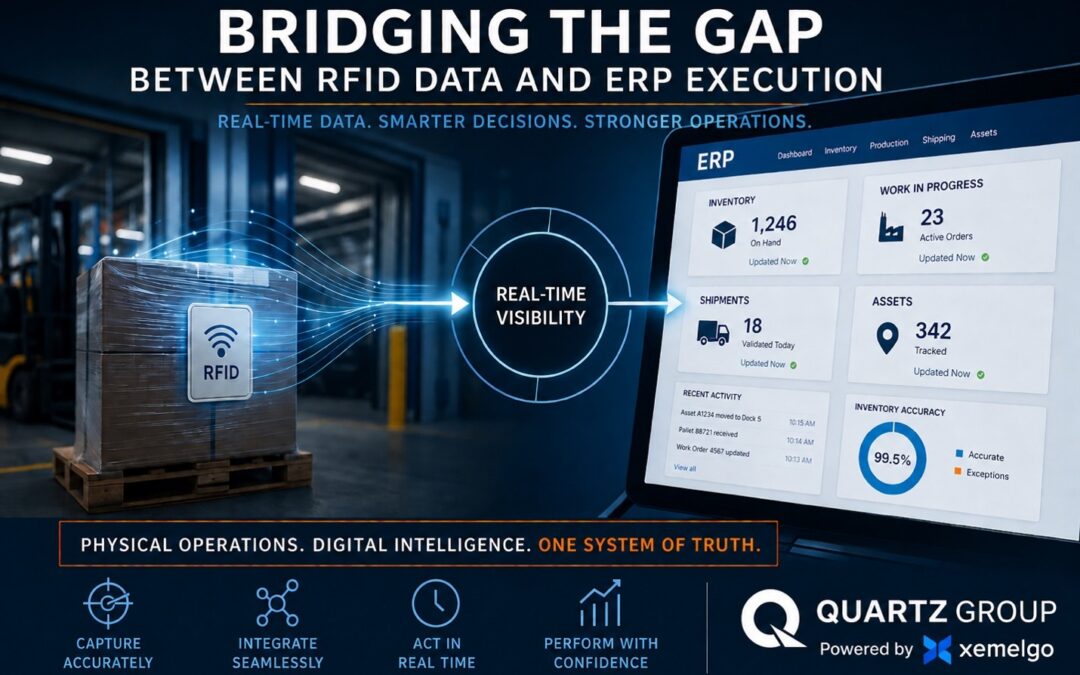
Bridging the Gap Between RFID Data and ERP Execution

Bridging the Gap Between RFID Data and ERP Execution

The views and opinions expressed in this article are those of the author and do not necessarily reflect the official policy or position of AIM Global

As RFID adoption continues to mature across manufacturing and distribution, the conversation is shifting.

It’s no longer about whether RFID works. That’s been established. Accuracy, automation, and hands-free data capture are well understood. The real challenge many organizations now face is what happens after the read.

Specifically, how RFID data is integrated into core enterprise systems.

In many environments, RFID operates alongside the ERP rather than within it. Data is captured effectively at the edge, but delays, middleware complexity, or batch processing can limit its impact on real-time decision-making. The result is a familiar gap between physical operations and system-of-record updates.

This is where the next phase of RFID maturity is emerging.

Organizations are increasingly prioritizing tighter integration between RFID platforms and ERP systems like Epicor Kinetic and Prophet 21. The goal is not simply visibility, but operational alignment, where events in the physical world immediately influence system workflows.

When RFID data is fully integrated into ERP processes, several capabilities become more accessible:

  • Inventory accuracy transitions from periodic validation to continuous awareness
  • Work-in-progress tracking reflects actual movement rather than last recorded transactions
  • Shipping and receiving processes can be validated automatically at key transition points
  • Asset tracking becomes less dependent on manual input and more reflective of real-time location data

These shifts are less about new technology and more about how existing technologies are implemented.

One approach gaining traction is the concept of an “ERP-native” RFID layer, where RFID events are treated as first-class system transactions rather than external inputs. Platforms such as Xemelgo are designed with this model in mind, enabling more direct integration with enterprise workflows.

For organizations already invested in RFID infrastructure, this raises an important question:

Is your current deployment simply collecting data, or is it actively driving system behavior?

As the industry continues to evolve, the distinction between those two approaches will likely define the next wave of operational performance gains.

Visibility is a choice.

More organizations are choosing to close the gap between what their systems say should happen and what is actually happening on the floor.

See what real-time visibility looks like at https://quartztrack.com


One of India’s leading private universities, with a campus population of over 70,000 students, faculty, and staff, set out to modernize its campus operations through intelligent automation. The objective was clear: deploy a scalable, secure, and reliable AIDC-based solution that could simplify attendance tracking, automate entrances, and streamline student leave management, while supporting high user volumes and daily peak traffic.

To achieve this, ID Tech Solutions designed and implemented a fully integrated AIDC Technology Solution combining facial recognition devices, automated turnstiles, and centralized management software.

Solution Overview

The deployed solution covers three core operational areas:

    • Attendance Management
    • Entrance Automation
    • Student Leave Management

The system includes 400 advanced facial recognition devices with a user capacity of up to 1 lakh users, ensuring scalability well beyond the university’s current requirement of 70,000 users. These devices are strategically installed across academic buildings, hostels, and campus entry points to capture attendance and access events in real time.

For secure and controlled access, IDT T8000 heavy-duty motorized turnstiles were deployed at key entrances. Designed for high-traffic environments, the turnstiles offer fast response times, smooth throughput, and reliable operation during peak hours, making them ideal for large educational campuses.

Technical Innovation through AIDC

The facial recognition devices enable contactless identification, eliminating the need for ID cards or manual registers. With high-speed face matching, large template storage, and accurate detection, the system ensures:

    • Fast user authentication
    • Elimination of proxy attendance 
    • High accuracy even during crowd movement

The AIDC framework automatically captures entry, exit, and attendance data and syncs it with the central platform. This real-time data flow provides administrators with instant visibility into campus activity.

The student leave management module integrates seamlessly with the access control system. Approved leaves are automatically reflected in access permissions, reducing manual verification and ensuring compliance with university policies.

Operational Impact

The implementation has significantly improved overall campus operations:

    • Attendance processes are now fully automated, saving time for faculty and administrative staff
    • Entrance automation has improved security and crowd management, especially during peak hours
    • Manual effort and paperwork have been reduced, improving operational efficiency
    • Real-time data availability supports faster decision-making and better planning

The system has also enhanced the student experience by enabling smooth, contactless movement across campus while maintaining strict access control.

About ID Tech

With nearly two decades of experience, ID Tech specializes in automating identity, security, and traceability through innovative and reliable AIDC technologies. Our solutions are designed to simplify operations, improve accuracy, and enhance security across high-volume environments.

ID Tech (https://www.idsolutionsindia.com/) is a trusted partner for India’s leading universities, where our solutions are widely used to automate student attendance, library systems, entrance and access control, and other campus operations. By combining technologies such as RFID, facial recognition, biometrics, and automated access systems, we help institutions build smart, secure, and future-ready campuses.