

Demystifying Ambient IoT and RFID Gen 2: Similarities, Differences, and Future Potential
As technology continues to evolve, terms like Ambient IoT and RFID Gen 2 are becoming more prevalent in discussions about the future of interconnected systems and supply chain visibility. Both technologies are transforming industries and driving more efficient operations, but they do so in distinct yet sometimes overlapping ways. AIM is actively educating on and exploring the similarities and differences between Ambient IoT and RFID Gen 2, with the goal of shedding light on how each is uniquely positioned to enhance the capabilities of the Internet of Things (IoT).
What is Ambient IoT?
Ambient IoT refers to a network of interconnected devices and sensors that operate in the background to gather, process, and transmit data with minimal or no human intervention. These devices are designed to optimize systems, automate tasks, and enhance user experiences seamlessly. Ambient IoT relies on features such as ubiquity, context-awareness, and energy efficiency. For instance, it uses battery-free technology like Bluetooth tags that can harvest energy from the environment, making them ideal for long-term deployment with low maintenance needs. This enables devices to interact autonomously, communicate with cloud networks, and sometimes even with each other, pushing the boundaries of what is possible with traditional IoT frameworks.
Understanding RFID Gen 2: A Foundational Technology
RFID Gen 2, particularly RAIN RFID, has been a cornerstone of the Auto-ID industry, attaching unique identification to inanimate objects to connect them to the internet. Unlike Ambient IoT, which focuses on continuous data transmission in a broader context, RFID Gen 2 typically operates by transmitting data when it is within the range of a reader, powered by radio waves. This technology has proven its value for various applications, such as inventory management and asset tracking, where high-speed data capture and accuracy are paramount. One of the critical advantages of RFID Gen 2 is its well-established ecosystem, which includes standardization efforts like the GS1 GTIN, making it a trusted choice for many industries.
Bridging the Gap: Complimentary, Not Competing Technologies
While Ambient IoT and RFID Gen 2 differ in their operational focus, they are not necessarily competing technologies. In fact, they are more like different tools in an engineer’s toolkit. Ambient IoT builds upon the foundation laid by RFID Gen 2, using advancements in energy harvesting and low-cost tags to extend IoT’s reach. As both technologies continue to evolve, professionals in the field of Auto-ID will find that the knowledge and experience gained from RFID Gen 2 will be highly transferable to Ambient IoT. Understanding how to leverage each technology’s strengths—whether it be the low-cost, ubiquitous deployment of Ambient IoT or the high-accuracy, high-speed data capture of RFID Gen 2—will be essential in architecting future-proof solutions.
Learn More: Watch the AIM Webinars on Ambient IoT and RFID Gen 2
To dive deeper into these transformative technologies, AIM hosted two webinars focusing on Ambient IoT and RFID Gen 2. These webinars explored how these technologies are scaling, their future in the IoT landscape, and practical applications that can drive real-world impact. Don’t miss this opportunity to learn from industry experts like Steve Statler of Wiliot, Jeanne Duckett of Avery Dennison and Scott Austin of Zugang Technology Connections and discover how industries are leveraging both Ambient IoT and RFID Gen 2 for smarter, more efficient operations.

EM Microelectronics CEO Michel Willemin Attends ESMC Groundbreaking Ceremony for New Chip Plant in Germany

AIM Unveils Industry Whitepapers on Sensor Technologies and RFID Recycling
Educational Resources Highlight Innovations in Supply Chain Monitoring and Environmentally Responsible RFID Solutions
Pittsburgh, PA, August 21, 2024 – AIM,the leading industry association with over 50 years of innovation, standards, and solutions in automatic identification and data capture (AIDC) technologies, proudly announces the release of two new educational resources created by the RFID Experts Group and Visibility Technologies Industry Group. These whitepapers provide essential insights for the AIDC community, focusing on environmental sensors in the supply chain and sustainable practices for RFID tag recycling.
Understanding Sensors for the Supply Chain
This whitepaper developed by the RFID Experts Group, explores the vital role environmental sensors play in modern supply chains. Covering key metrics such as temperature, moisture, light, vibration, and food ripeness, the resource details how these sensors are essential for enhancing operational efficiency, maintaining compliance, and ensuring traceability across diverse industries. The whitepaper offers practical guidance on selecting sensors that meet specific operational needs while considering environmental and regulatory factors.
Marty Johnson, Senior Manager of Product Management at Zebra Technologies, emphasized the significance of this whitepaper as a resource for valuable insights to anyone seeking to optimize their supply chain monitoring: “As organizations increasingly recognize the need to monitor environmentally sensitive products throughout the supply chain, it becomes crucial to understand the variety of sensors and monitoring solutions available today.”
Guidance for Improving RFID Tag Recycling and Disposal
With growing concerns over e-waste and evolving regulations, the Visibility Technologies Industry Group has produced a whitepaper addressing the challenges and opportunities surrounding RFID tag recycling and disposal. The resource delves into the complexities of managing RFID tags, which consist of materials that require specialized recycling processes. It also explores innovations like sustainable materials, design-for-deconstruction principles, and collaborative efforts aimed at improving RFID recyclability.
Mary Lou Bosco, CEO of AIM, highlighted the importance of sustainability within the industry: “As sustainability becomes a global imperative, the RFID sector must take proactive steps to reduce its environmental impact. This whitepaper offers actionable solutions for advancing environmentally responsible practices in our industry.”
For media inquiries or further information on these resources, please contact AIM’s headquarters by email at info@aimglobal.org or call +1.724.742.4470.
About AIM
AIM is the trusted worldwide industry association for the automatic identification industry. For over half a century, AIM has provided unbiased information, educational resources, and standards to providers and users of AIDC technologies. AIM membership offers access to insider perspectives on trends and opportunities, advocacy, and community engagement. Visit www.aimglobal.org for more information.

Wiliot Launches First-of-Its-Kind Generative AI Tool for Unlocking Natural-Language Insights into Vast, End-to-End Supply Chains

Honeywell Launches INNCOM Direct to Help Mid-Market Hotels Reduce Their Carbon Footprint

Fresenius Kabi Receives 2024 Trailblazer Award From Premier Inc. for Supply Chain Innovation
TEKLYNX 2024 Products Bring Customer-Centric Enhancements for Better Usability and Efficienc

Hana Technologies, Inc. Honored by U.S. Government Representatives – Hana Family

AIM Celebrates Scanniversary
Today is a very special day to AIM and anyone involved in the automated data capture community. We created this special presentation to commemorate a pivotal moment in history—the 50th anniversary of the first barcode scan in Troy, Ohio. It was here, at just after 8am on June 26, 1974, that the first item marked with the Universal Product Code (UPC) was scanned at the checkout of Troy’s Marsh Supermarket; a pack of Wrigley’s Juicy Fruit chewing gum.
Not only that, this presentation explores just how far this industry has come from that first UPC barcode scan. Listen to our industry experts share how these innovations enhance supply chain visibility, traceability, and regulatory compliance. Our experts examine the transformative potential of RFID technology and 2D barcodes and successful case studies that highlight the real-world impact of advanced barcode scanning solutions.
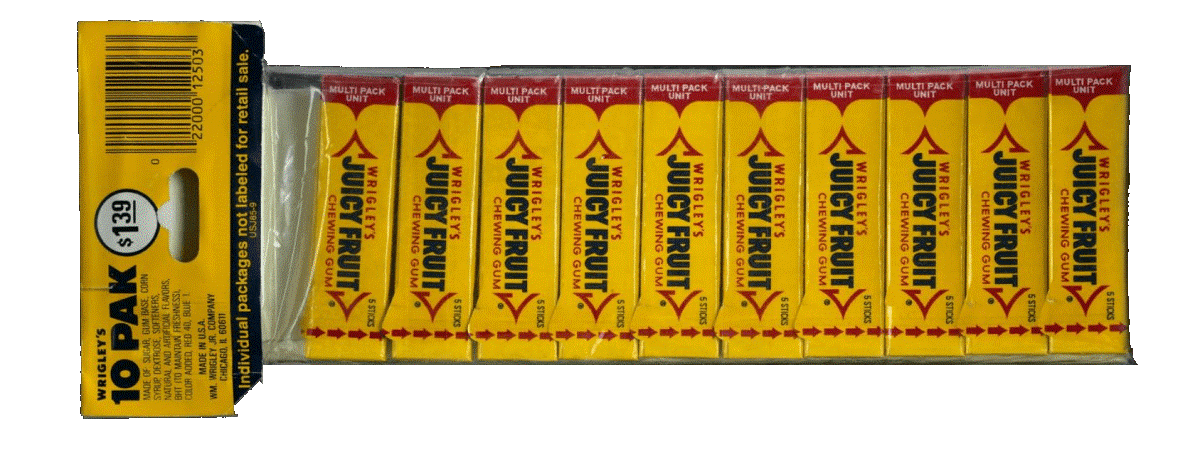
Image Credit: Wrigley’s Juicy Fruit Chewing Gum, 1974. Source: Smithsonian, National Museum of American History
Thank you to our sponsors:




“As a local Dayton resident and business owner, I am proud to be associated with the industry that has transformed so many industries starting with the scanning of a pack of gum in Troy, Ohio and it’s start with our historical Dayton business, NCR. I am equally proud to be part of AIM Global that represents all of the stakeholders that are a part of the automatic identification and data capture ecosystem.”
Chuck Evanhoe, AIM Global Board Chairperson and President, Aware Innovations.
Want to learn more about AIDC history?
Check out the AIM Global Timeline
https://www.aimglobal.org/aim-yesterday/